

A spare bedroom is ready, but the questions are more complicated than where the bed should go. What will help a teenager feel safe without making the home feel controlled? How should carers respond if school arrangements change, contact with family is difficult, or the placement starts to feel unsettled? Preparing a foster home for teenagers means thinking beyond furniture: a young person needs privacy, dependable adults, clear boundaries and practical support for the next stage of life.
Teenagers aren't younger children with different interests. They bring their own identities, relationships, routines and expectations, and may need time before they trust a new household. A prepared home makes room for that uncertainty while offering the consistency and care that help a young person settle.
Table of Contents
- What Fostering a Teenager Really Involves
- Preparing the Physical Space for a Teenager
- Setting Boundaries and House Rules That Work
- Building Trust and Engaging With Your Teenager
- Supporting Education and School Continuity
- Planning for the Transition to Adulthood
- Making a Difference With a Spare Bedroom
What Fostering a Teenager Really Involves
Someone considering fostering may wonder whether teenagers are commonly placed with foster families, or whether foster care is mainly for very young children. In England, foster homes are the main placement setting for children looked after by local authorities. Government statistics for the year ending 31 March 2025 recorded 54,820 children in foster placements, or 67% of all looked-after children. Around 24% of foster placements were with a relative or friend approved as a foster carer, while 19,870 children were in long-term fostering placements (official children looked-after statistics).
Those figures put teenage fostering in context. Foster care is not just a setting for very young children; it continues to matter through adolescence, when a young person may be navigating school, family connections, changing identity and growing independence at the same time. Long-term fostering can offer continuity, while short-term arrangements may provide a home during a period of change. The right type of placement depends on the young person's needs and care plan.
More than a room and a routine
A teenager entering a foster home may be expected to manage adult conversations and decisions while still needing support with ordinary parts of growing up. That can include keeping up with education, making sense of family relationships, developing confidence and practising everyday responsibilities. The carer's role isn't to force closeness or act as a replacement for family. It's to offer safe, reliable care while respecting the young person's history and relationships.
Read how placement matching works before deciding what a particular placement might involve. A thoughtful match considers more than whether a bedroom is available. It needs to account for the teenager's identity, culture, faith, language, relationships and education, alongside the household's capacity and experience.
An honest readiness check
Teenage fostering can involve difficult conversations, disrupted plans and periods when trust takes time to build. A young person may want company one day and privacy the next. Carers need to hold reasonable boundaries without interpreting every disagreement as rejection, and to ask for professional guidance rather than trying to manage complex decisions alone.
Readiness doesn't mean having a perfect home or knowing exactly how every situation will unfold. It means being willing to listen, learn, work with the professionals involved and provide a teenager with steady care while their needs are understood.
Preparing the Physical Space for a Teenager
The bedroom matters because it's a place where a teenager can have privacy and store personal belongings. It shouldn't feel like a spare room that has been left untouched for visitors, or like an institution with everything stripped of personality. Begin with a clean, comfortable room, a proper bed, good lighting and practical storage, then leave space for the young person to make choices about decoration.
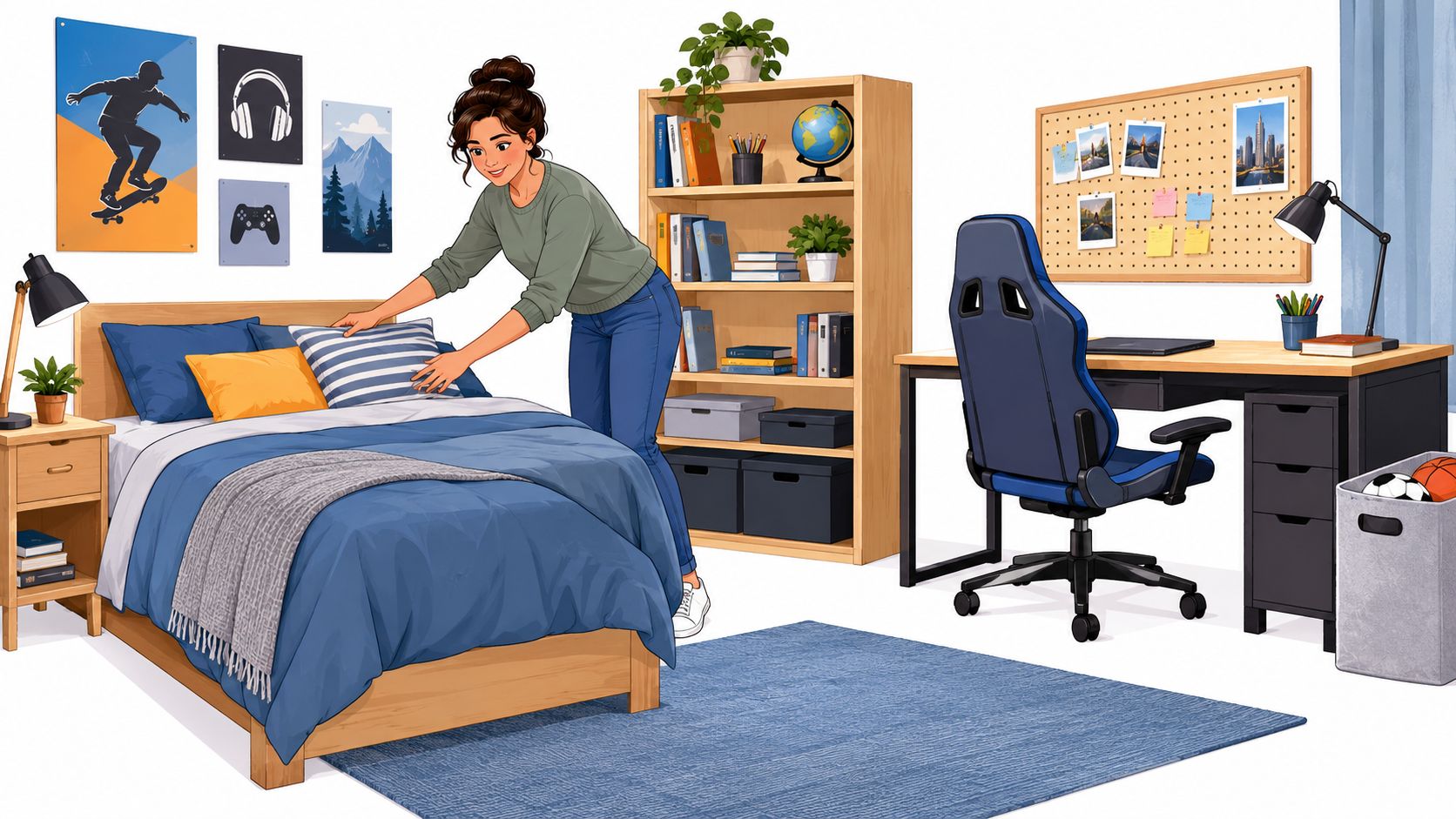
Prepare the bedroom without taking over
Check that there's room for clothes, school items and personal possessions. A desk or clear surface can help with homework, but it needn't be elaborate. Avoid buying highly personal items in advance, or decorating the room around assumptions about a teenager's tastes. A neutral starting point makes it easier for the young person to choose what feels comfortable.
Explain how privacy works in the household. Knock before entering, agree how laundry and room tidying will be handled, and check what the young person needs rather than treating a closed door as defiance. Practical bedroom guidance for foster carers can help households think through the difference between preparing a space and imposing rules on it.
Make shared areas safe and usable
Look at the home from the teenager's point of view. Can they use the bathroom without feeling rushed or exposed? Is there a place to sit with others, and somewhere to step away when they need quiet? Clear, everyday arrangements for shared areas can prevent unnecessary tension.
Medication, cleaning products and other potentially hazardous items should be stored safely in line with the child's needs and the household's agreed safeguarding arrangements. Ask the supervising social worker for advice on any specific risks or safety measures; don't rely on guesswork or assume that one approach suits every young person.
Before a placement, check the essentials:
- Bedroom: clean, furnished, warm and ready for personal belongings.
- Storage: space for clothes and school items, with personal possessions treated respectfully.
- Shared spaces: workable arrangements for the bathroom, meals and time alone.
- Safety: household risks considered and secure storage agreed with professionals.
- Personal choices: opportunities for the teenager to help make the room their own.
A spare bedroom is a practical starting point, not the whole preparation. The aim is to create a home that feels lived in and welcoming, while keeping decisions about safety and care connected to the individual placement plan.
Setting Boundaries and House Rules That Work
A teenager needs boundaries, but a long list of rules delivered before there's any relationship can make a new home feel like a test. Start with the expectations that keep people safe and help the household function. Explain the reason for each one, listen to the young person's views, and agree how changes can be discussed.
Curfews work better as a safety conversation than as a power struggle. A carer can explain what information is needed if plans change, how the teenager can make contact and what happens if they're running late. The exact arrangement should reflect the young person's age, circumstances and care plan, with the fostering team involved where a decision needs professional agreement.
Keep rules clear, fair and reviewable
Phone and online boundaries need particular care. Rather than assuming that taking a phone away will solve a concern, establish what the concern is, who needs to know and what steps protect the young person. Online relationships may be an important source of connection, but they can also raise safeguarding questions. Carers should seek advice instead of making restrictions that could isolate a teenager or undermine agreed plans.
Chores can be presented as a shared part of household life, not as punishment. Agree a manageable contribution and be specific about what “tidy” or “help out” means. Visitors also need clear arrangements: discuss who can come over, where they can spend time and how plans will be checked, taking account of safeguarding guidance and the young person's relationships.
Practical rule: Explain the reason for a boundary, agree what happens if it isn't followed, and revisit the arrangement when circumstances change.
Consistency matters, but it isn't the same as rigidity. A teenager who has experienced disrupted routines may need expectations repeated calmly and applied predictably. A disagreement about a rule doesn't automatically mean the rule should disappear, but it can show that the reason or the way it's being applied needs attention.
Notice when strain is building
Placement stability deserves attention over time, not just a check that a placement is still active. The Department for Education defines high instability as three or more placements within a reporting period. In England, 10% of looked-after children experienced this during 2024; the rate was 14% among children looked after for less than 12 months, compared with 9% among those in care for at least 12 months (2024 stability measures). This national measure covers all looked-after children, not fostered teenagers alone, so it shouldn't be treated as a placement success rate.
Carers can respond to tension earlier by sharing concerns with the social worker, recording changes and agreeing a plan before a crisis develops. Foster carer training can support carers to understand how boundaries, communication and safeguarding work together. The aim isn't to prevent every disagreement; it's to make sure adults respond consistently and the teenager has a safe way to raise concerns.
Building Trust and Engaging With Your Teenager
Trust tends to grow through ordinary, repeated actions. A carer says what will happen, follows through, and makes space for the teenager to respond in their own time. A young person might accept a lift to an activity but avoid conversation on the way. That can still be a useful shared routine; it doesn't need to become a demand for disclosure.

Let connection develop at the young person's pace
Small choices can help a teenager feel included without putting them on the spot. Offer options about a meal, a journey or how to spend free time, then accept a refusal without turning it into a test of gratitude. Shared interests can provide an easy way to spend time together, but the teenager's interests don't need to become a project for the carer.
Difficult conversations are easier when they're calm and specific. If a teenager comes home upset after family contact, a carer can acknowledge that the visit may have brought up strong feelings, ask whether they want company or space, and avoid pressing for details. Contact with birth family should follow the agreed plan, with changes discussed through the appropriate professionals rather than improvised during an emotional moment.
Online relationships deserve the same respectful curiosity. Ask what the teenager wants adults to understand about their friendships, and raise safety concerns without assuming that every online connection is harmful. When a decision affects contact, privacy or safeguarding, involve the social worker and follow the care plan.
Treat warning signs as information
A placement can start to feel strained through repeated conflict, withdrawal, missed routines or concerns linked to education and family contact. Those signs aren't proof that a teenager is “difficult”; they may point to a mismatch, a stressful transition or adults needing to coordinate better. National stability data show higher instability for children in their first year in care, 14% compared with 9% for children looked after for at least a year, and instability can also be shaped by trauma, identity needs, relationships and education disruption (England stability measures for 2025).
That's why carers should report patterns early rather than wait until they feel unable to cope. The role of foster care social workers includes helping carers and the wider team respond to changing needs. A timely conversation can clarify what support is available, what decisions require agreement and how to protect the teenager's relationships and routines.
Supporting Education and School Continuity
Education gives a teenager familiar routines, relationships and a sense of progress. A move into foster care can disrupt all three, so carers should find out what is already in place before changing schools or making promises about what can be arranged. The young person's views matter: they may want to remain at their current school, or a change may be needed to make daily life workable.

Find out what the teenager needs
Ask the social worker what information can be shared with the school, who the main contact is and whether the young person has specific learning or support needs. If the teenager has missed lessons or is behind with work, begin by finding out which subjects feel manageable and where they need help. A quiet place, access to school materials and a predictable time for homework can help, but support should fit the young person rather than become another source of pressure.
When a school move is being considered, carers can raise practical questions with the local authority and fostering team: how will attendance be maintained during the change, what records need to transfer, and who will tell the young person what happens next? Don't assume that an address change automatically settles the education plan.
Keep learning steady through disruption
If school travel becomes difficult or a placement is at risk, raise the concern promptly. Protecting continuity may involve coordination among the carer, school, social worker and local authority. Carers shouldn't make commitments about transport, school placement or specialist provision before the relevant people have agreed what's possible.
At home, encouragement works better than constant checking. Ask the teenager what would help before a test or assignment, celebrate effort without making grades the measure of their worth, and leave room for rest and social life. Talk about future options in an open way, including further study, training or work, without assuming that one route is right for everyone.
Planning for the Transition to Adulthood
Preparing a teenager for adulthood isn't a final task to begin near their eighteenth birthday. It's an ongoing part of fostering: everyday opportunities to cook, plan spending, manage appointments, travel safely and make decisions help a young person practise independence while support is still close by.
Care-leaver figures illustrate why that preparation needs to be practical as well as emotional. In 2025, 62% of 18-year-olds who ceased to be looked after on their eighteenth birthday and had been living in foster care were still living with their former foster carers three months later. Earlier government data shows that, in 2022, 52% of 18-year-old care leavers were in education, 15% were in employment or training, and 28% were not in education, employment or training (care-leaver and Staying Put data).
Make skills part of ordinary life
Cooking together can teach a young person to prepare a meal while also giving them a choice in what the household eats. Budgeting can start with planning a shopping list or comparing everyday costs, rather than handing over responsibility without guidance. Carers can also help a teenager practise making appointments, understanding household routines, preparing for work or study, and asking for help when a plan goes wrong.
These aren't tests of whether a young person is “ready” to leave care. Progress may be uneven, and skills should be taught without shame. A teenager who needs reminders still benefits from being included in decisions and given manageable chances to try again.
Discuss continuing support early
Staying Put enables eligible young people to remain with former foster carers after turning 18. It isn't an automatic arrangement, so the carer, young person, local authority and fostering team should discuss the options and practical implications ahead of the transition. The teenager should understand what could change, what support may continue and how their views will inform planning.
Long-term fostering may provide continuity through adolescence, and an explanation of long-term foster care can help carers understand the placement type. Whatever the plan, adulthood should not be treated as a sudden finish line. A young person needs clear information, a voice in decisions and a realistic support network as their role in the household changes.
Making a Difference With a Spare Bedroom
A spare bedroom can make a practical difference, but it's only the beginning. A teenager also needs adults who can prepare a welcoming space, set fair boundaries, protect education and relationships, and ask for help when a placement feels unsettled. Those everyday commitments can matter as much as the room itself.
At the end of March 2024, England had 42,615 fostering households and 70,465 approved mainstream fostering places. Approved places had fallen 3% from 72,770 the previous year, while around 57,000 children were in foster care (fostering in England statistics). A household's capacity is assessed rather than assumed, and an available bedroom alone doesn't determine whether a placement is right. The young person's needs and the household's circumstances must be considered together.
Carers don't have to manage the fostering journey without professional guidance. Organic Fostering offers assessment, preparation and training, a supervising social worker for each fostering household, and out-of-hours advice for approved carers. Its matching approach considers a child's identity and relationships alongside the practical needs of a placement.
If a teenager's needs, privacy and future are prompting questions about whether fostering could fit your household, visit Organic Fostering to learn about fostering in Manchester and the North West. The agency offers an informal, no-obligation conversation for people considering becoming foster carers or transferring from another agency, so you can discuss the realities and support involved before deciding what to do next.