
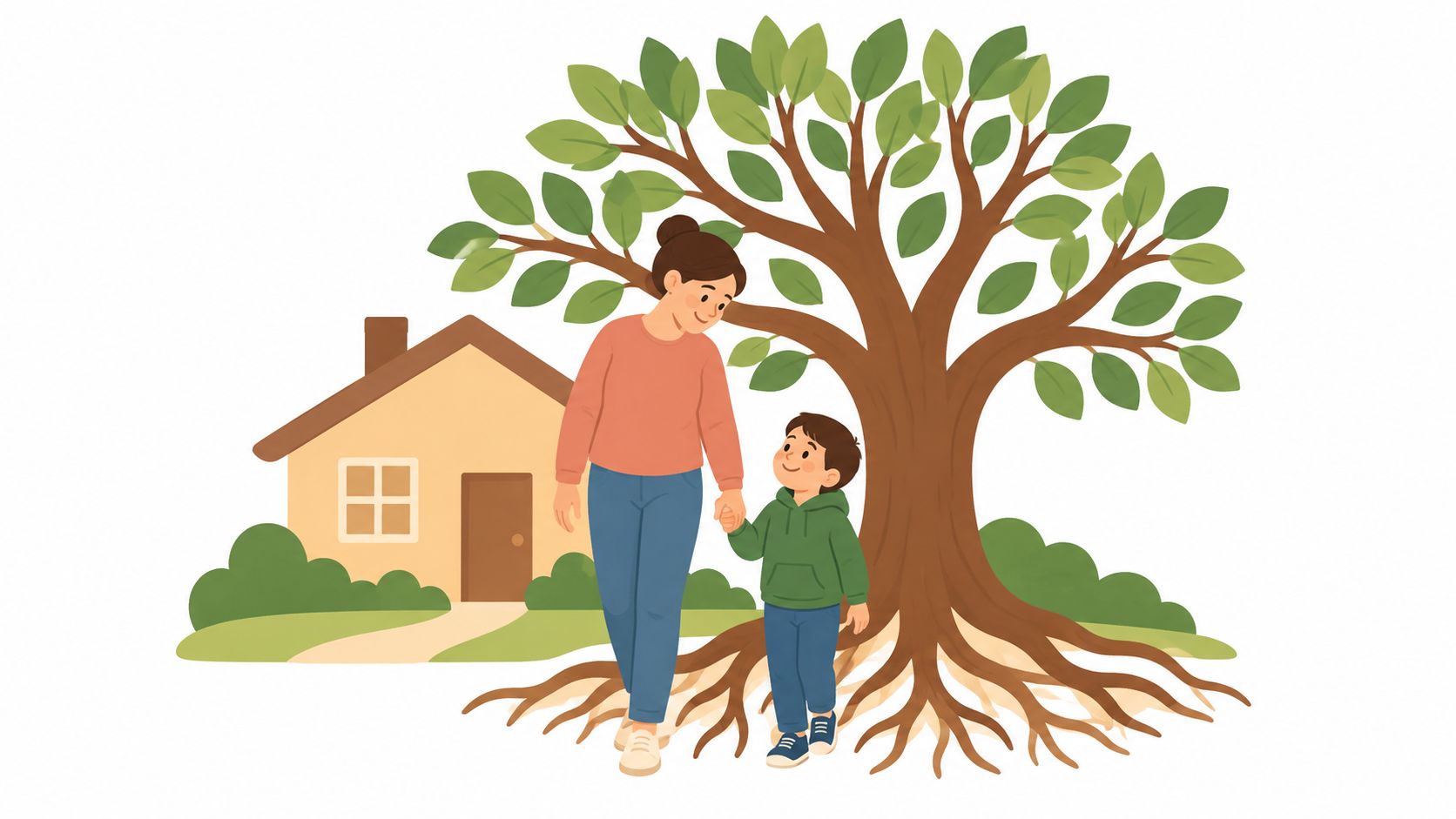
In England, 19,870 children were in long-term fostering placements on 31 March 2025, meaning they were expected to remain with the same foster family, usually until adulthood. Long-term foster care is a formal permanence plan for a child who cannot return to their birth family and doesn't want to be adopted.
A spare bedroom, a conversation with a social worker and a willingness to make room in family life may be the starting point for someone considering fostering. The more important question, however, is what kind of permanence a child needs, and whether a household can offer stability while respecting the child's identity, history and relationships.
Long-term fostering isn't a placement that lasts for a long time. It's a carefully planned commitment to provide a secure home, consistent care and dependable relationships through childhood and, where appropriate, into adulthood. The arrangement can be rewarding, but it also involves professional responsibilities, emotional patience and ongoing support.
Table of Contents
- Understanding the Core Purpose of Long Term Foster Care
- How Long Term Fostering Differs From Adoption and Short Term Care
- Who Needs Long Term Placements and Why Matching Matters
- The Daily Realities and Responsibilities of a Long Term Carer
- Navigating Support, Allowances, and Permanence Planning
- Addressing Common Misconceptions About Long Term Fostering
- Starting Your Fostering Journey in the North West
Understanding the Core Purpose of Long Term Foster Care
A child may reach a point where returning to their birth family isn't safe or possible, while adoption may not be suitable for their circumstances or wishes. The child might be older, part of a sibling group, strongly connected to their birth family, or in need of a permanence plan that preserves particular relationships and aspects of identity.
Long-term fostering gives that child a stable family base. The plan is usually for the child to remain with the same foster family until adulthood, rather than move between temporary placements while professionals continue searching for another outcome. The arrangement is based on permanence, continuity and belonging, not on the number of months a child stays in one home.
Permanence means more than a placement length
In England, long-term foster care is a legal and operational permanence plan. It means the local authority continues to have responsibility for the child as a looked-after child, while the foster carer provides daily care and becomes a consistent adult presence.
The plan doesn't transfer parental responsibility in the same way as adoption. It also doesn't mean that a child's relationships with birth relatives automatically end. Contact arrangements depend on the child's welfare and the decisions made by the local authority and relevant professionals.
UK practice has recognised long-term foster care as a permanence option since the 1980s. The guidance on long-term foster care and permanence explains that the focus in England is on the permanence plan, while Scotland commonly uses a definition involving a placement lasting longer than 24 months without a permanence order.
Practical rule: A long-term placement should be planned around the child's future, not used simply because a bedroom happens to be available.
What the child needs from the arrangement
A child in long-term foster care needs more than food, clothing and a safe place to sleep. They need adults who can remain emotionally available through changes in behaviour, school, health, friendships and contact with birth family members.
That might mean celebrating progress that others overlook, attending meetings when school becomes difficult, helping a teenager manage strong feelings, or keeping familiar routines during an unsettling period. The different types of foster care can help prospective carers understand how long-term placements differ from emergency, respite and short-term arrangements.
Long-term foster care doesn't promise that every difficulty will disappear. It offers a dependable relationship in which the child doesn't have to keep wondering where they'll live next. That secure base can help a child develop trust, confidence and a clearer sense of belonging.
How Long Term Fostering Differs From Adoption and Short Term Care
Long-term fostering, adoption and short-term care can all give a child safety and family life, but they create different legal arrangements and expectations. A prospective carer needs to understand those differences before deciding which type of fostering may fit the household.
Adoption transfers parental responsibility to the adoptive parents and creates a permanent legal family relationship. Long-term fostering keeps the child's looked-after status with the local authority, while the foster family provides day-to-day care and emotional security. Short-term fostering is designed to meet immediate needs while professionals assess the child's circumstances or work towards another plan.
Comparing the main pathways
| Feature | Long-term fostering | Adoption | Short-term care |
|---|---|---|---|
| Purpose | A planned permanent home, usually until adulthood | A permanent legal family relationship | Safe care while a longer-term plan is being assessed or arranged |
| Legal status | The child remains looked after by the local authority | Parental responsibility transfers to the adoptive parents | The child remains looked after while the temporary plan continues |
| Birth family relationships | Contact may continue when it's safe and in the child's interests | Contact is planned individually and may be more limited | Contact and decisions may change as assessments or proceedings continue |
| Carer's role | A consistent parent-like carer who works with professionals | The child's legal parent | A safe, responsive carer during a period of change |
| Expected duration | Usually until adulthood, with planning for adult independence | Intended to continue permanently | Usually ends when the child returns home, moves to another permanence arrangement or receives a different plan |
| Professional involvement | Regular social work, reviews, training and support continue | Support and services follow the adoption arrangement | Regular professional involvement is part of the temporary plan |
The legal position in England is set out in the GOV.UK explanation of fostering types, which describes long-term fostering for children who can't return to their birth family and don't want to be adopted.
The emotional difference
A long-term foster carer may become the person who attends parents' evenings, remembers medical information, supports hobbies and helps a young person prepare for work or further education. At the same time, the carer needs to recognise that the child has a family history and important relationships beyond the foster household.
Adoption can create a different sense of legal and family permanence. Short-term care requires a different emotional posture, because the carer supports a child while accepting that the placement may end when a plan changes. Neither route is automatically better. The appropriate plan depends on the child's welfare, wishes, relationships and circumstances.
Prospective carers considering temporary placements can read about short-term placements and what they involve. A household may also choose to offer more than one type of placement over time, subject to assessment, approval and matching.
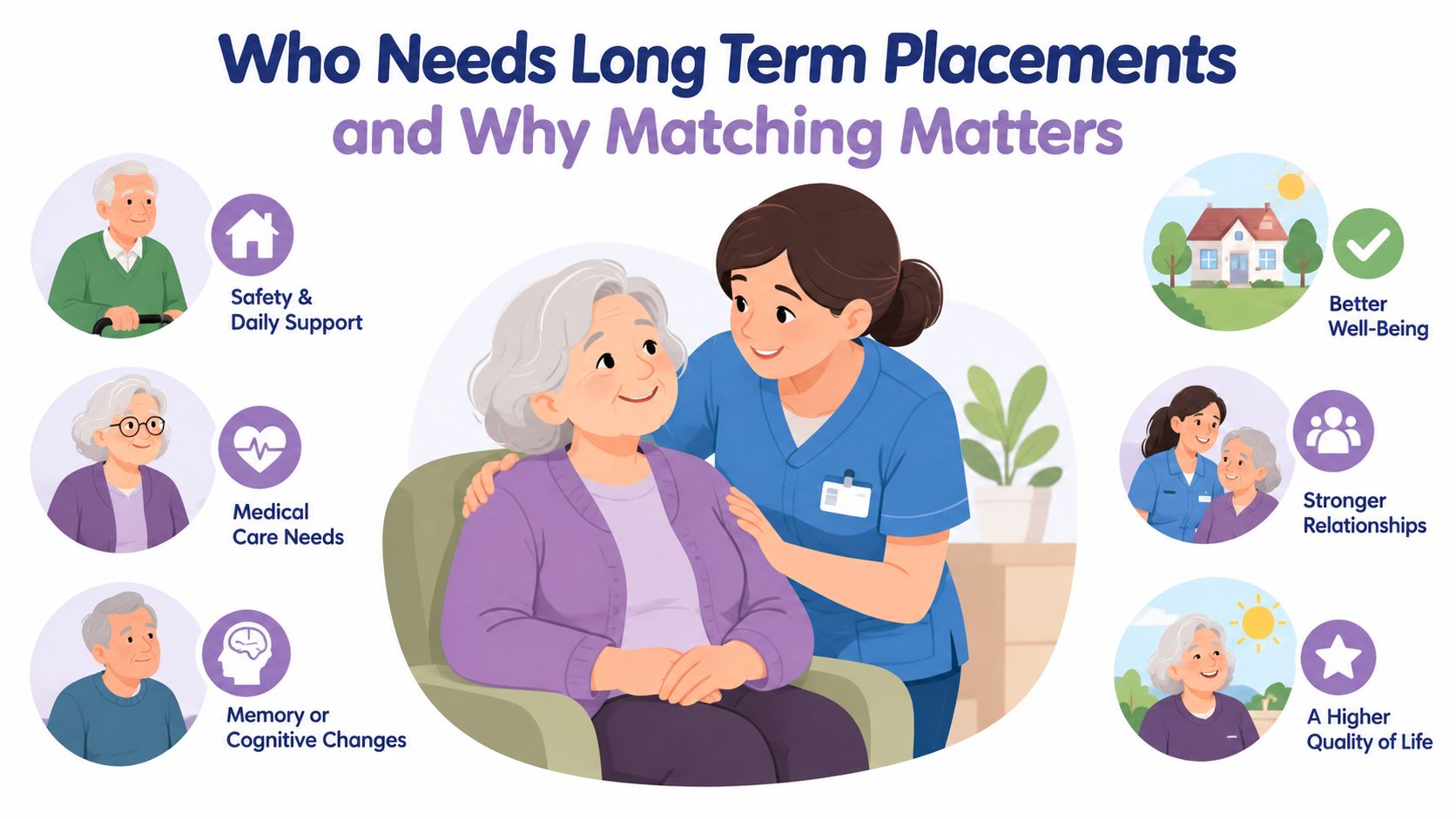
Who Needs Long Term Placements and Why Matching Matters
A long-term placement is usually considered when a child needs day-to-day family life to feel settled, but adoption or a return home is not the right plan. That often includes older children, teenagers and sibling groups. It can also apply where keeping contact with birth family, culture or established relationships is central to the child's welfare.
The first question is never just whether a home has a spare room. A good match looks at the child's personality, past experiences, education, health, relationships, communication style and daily routines. It also asks whether the foster family can support the child's culture, faith, language and sense of identity without forcing them to fit in at the expense of who they are.
The pressure on available homes
Need is high, and placement choice is limited. The 2025 children looked-after statistics show that 81,770 children were in care in March 2025, including 54,820 in foster homes, supported by 42,190 fostering households. The same government data also records a decline in approved mainstream foster carers since 2019 and a 24% increase in residential care between 2020 and 2025.
Long-term fostering remains one of the main permanence options, but the pressure is visible in the long-term figures too. The number of children in long-term placements fell from 23,920 in 2021 to 19,870 in 2025. Over the same period, long-term placements outside a child's council boundary fell from 9,940 to 8,350, placements with other foster carers fell from 7,970 to 6,420, and new long-term fostering starts fell from 1,560 to 1,000. The government methodology for children looked after in England sets out the figures behind those trends.
That is why matching matters so much. A child should not end up in a long-term placement just because a bed is available. Good matching asks whether the placement fits the child's life, needs and likely future, rather than treating availability as the deciding factor.
Culture and identity are part of safety
Culture, faith, language and relationships are part of a child's safety, not extras to be dealt with later. They shape how a child sees themselves, how they express distress, how they celebrate important moments and how they stay connected with the people who matter to them.
Between 2015 and 2022, 31,000 children had a long-term foster care placement, and 95% of those placements were with unrelated carers rather than relatives or friends, according to the Family Routes analysis of Department for Education data. That makes culturally informed recruitment, assessment and support especially important across Manchester and the wider North West.
A carer does not need to share every part of a child's background to care well. What they do need is openness, humility and the willingness to learn, involve the right networks and support identity without making the child carry the whole burden of explanation.
The placement matching process should cover both practical care and belonging. It should ask whether the child can keep links with school, siblings, relatives, community and language, while the foster family gets the support needed to make the arrangement work. For some young people, that careful matching also helps long-term fostering sit alongside later staying put discussions, where the move into adulthood is planned with the same attention to continuity and relationships.
The Daily Realities and Responsibilities of a Long Term Carer
A long-term foster carer may start the morning by checking that a teenager has the right uniform, spend part of the day speaking with a school about missed work, and finish the evening helping the child prepare for a contact visit. The home feels like family life, but the carer also works within a professional care plan.
The child's social worker, supervising social worker, school staff, health professionals and birth family members may all have a role. The foster carer helps those adults share information appropriately, notice changes and keep decisions focused on the child.
Stability at home and advocacy outside it
A carer's everyday responsibilities may include:
- Education: Attending school meetings, encouraging attendance, requesting appropriate support and helping the child catch up without making school feel like another source of shame.
- Health: Arranging appointments, sharing relevant information and noticing changes in sleep, appetite, mood or physical health.
- Emotional care: Offering predictable routines, calm boundaries and reassurance when a child tests whether the placement will last.
- Relationships: Supporting safe contact with birth relatives and helping the child talk about family connections without criticism or pressure.
- Records and communication: Keeping professionals informed, attending reviews and recording important events in line with agency guidance.
- Independence: Teaching practical skills such as cooking, budgeting, travel planning and managing appointments as the young person grows.
Educational advocacy matters because placement stability doesn't remove the effects of earlier adversity or disrupted schooling. A government Family Routes study found that 51% of young people with a long-term permanent fostering plan stayed in placement until at least age 16, while 17% achieved Level 2 by the end of Key Stage 4 compared with 55% of all pupils. The same study found that 85% enrolled in further education. The Family Routes report on educational outcomes shows both the value of continuity and the lasting impact of prior disadvantage.
A stable home can create the conditions for progress, but it can't erase what happened before the child arrived.
Managing closeness and professional boundaries
Long-term care can feel intensely personal. The child may call the foster home home, yet the carer still needs to share information with professionals and respect decisions made through the care plan. That balance can feel unfamiliar at first.
A supervising social worker helps the household think through difficult conversations, behaviour, contact arrangements and professional meetings. The carer doesn't need to solve every problem alone. The important skill is knowing when to ask for guidance and how to keep the child's dignity at the centre of each decision.
Navigating Support, Allowances, and Permanence Planning
A foster placement runs on more than goodwill. It also needs clear money planning, steady support, and an agreed path for what happens as the child grows.
An allowance is meant to help meet everyday costs such as food, clothing, travel, activities and personal items. It is not a salary, and payment arrangements vary between fostering providers. The GOV.UK guidance on help with the cost of fostering explains that rates depend on the child's age and region and are updated each April.
For the tax year from 6 April 2026 to 5 April 2027, the statutory minimum weekly allowance in the Rest of England is planned at £176 for ages 0 to 2, £182 for ages 3 to 4, £201 for ages 5 to 10, £227 for ages 11 to 15, and £267 for ages 16 to 17.
Support should be practical and available
Before accepting a placement, it helps to ask how support works in real life. A foster carer may have the warmest intentions in the world, but without clear backup, even ordinary weeks can feel like trying to carry too many shopping bags with one hand.
Useful questions include:
- Supervising social worker: Who provides regular supervision, advice and help with care planning?
- Out-of-hours guidance: What happens if a serious concern comes up at night or over a weekend?
- Training: What preparation is offered before approval, and what learning continues afterwards?
- Peer connection: Can carers speak with other approved carers who understand the pressures of fostering?
- Placement matching: How are the child's needs weighed against the household's skills, routines and capacity?
- Financial clarity: Are allowances, fees, expenses and tax information explained in writing?
A household can also review fostering allowances and payment information before making financial decisions. The figures are a starting point for questions, not a promise of a particular payment.
Planning beyond the eighteenth birthday
Long-term fostering often overlaps with staying put, where a young person may continue living with former foster carers after turning 18. The relationship does not need to end just because childhood has ended, although the legal and financial arrangements change and need careful planning.
Official 2025 children looked-after statistics show that many young people who stay with former foster carers remain there beyond the point of adulthood. That matters because the move to independence is often gradual, like handing over house keys before someone is ready to live entirely on their own.
The practical aim is not to keep a young person dependent. It is to provide a secure base while they build confidence, education, work options, housing plans and everyday life skills at a realistic pace.
Addressing Common Misconceptions About Long Term Fostering
Long-term fostering is sometimes described as a second-best option when adoption doesn't happen. That description misses the child's rights, relationships and wishes. A child may need a permanent family experience without adoption because maintaining legal links with their birth family matters, or because their age, identity and circumstances make long-term fostering the more appropriate plan.
The arrangement should be deliberate, not passive. Professionals need to explain the plan to the child in an age-appropriate way, listen to their views and review whether the placement continues to meet their needs.
Common beliefs that need a closer look
“Long-term fostering is just short-term care that lasts longer.”
Short-term care is designed around change. Long-term fostering is planned around continuity and a future with the same family, usually until adulthood.
“Teenagers don't need a permanent family.”
Older children and teenagers still need reliable adults, encouragement and a safe place to return to. Their need for autonomy may be growing, but that doesn't remove their need for belonging.
“A foster carer must manage every difficulty independently.”
Foster carers work as part of a professional network. Training, supervision, out-of-hours advice and regular communication help carers respond safely when behaviour, contact or emotional needs become complicated.
“Cultural matching is only about finding a carer with the same background.”
Matching is broader than shared ethnicity or faith. It can involve language, food, community, family relationships, values, identity and the household's willingness to support all of those areas respectfully.
The number of long-term placements has contracted in recent years, but that doesn't mean the plan has lost its value. It means decision-makers and agencies need to keep asking whether each placement offers genuine stability, suitable matching and the right support for the child.
Starting Your Fostering Journey in the North West
A prospective foster carer doesn't need to decide everything during the first enquiry. The usual route begins with an informal conversation, followed by a home visit, an application, checks and references, preparation training, a full assessment and consideration by a fostering panel before approval.
The assessment looks at the household's capacity, relationships, health, finances, accommodation, background and support network. A spare bedroom, the right to work in the UK, time and flexibility are practical considerations, but the process also explores motivation, resilience and the ability to work openly with professionals.
Households across Manchester and the North West may be interested in long-term placements, short-term care, sibling groups or teenagers. Cultural, faith and language knowledge can be valuable, particularly when a child needs help maintaining identity and family connections. Existing foster carers considering a transfer can also ask how continuity, records and the child's welfare would be protected during the process.
The foster carer stories provide another way to reflect on the commitment, while an agency conversation can explain the practical steps without pressure. Approval isn't automatic, and a responsible agency should help a household decide whether fostering is right for its circumstances.
Organic Fostering offers an informal, no-obligation conversation, preparation and assessment guidance, ongoing training, a supervising social worker and support with placement matching across Manchester and the North West. Prospective carers and experienced carers considering a transfer can visit Organic Fostering to discuss long-term fostering, cultural matching and the support involved before making any decision.