

From 6 April 2026, the national minimum weekly allowance in the Rest of England category runs from £176 for a child aged 0 to 2 to £267 for ages 16 to 17. A fostering allowance calculator helps estimate what a household might receive, but it does not guarantee the final amount paid.
That matters for households in Greater Manchester and across the North West, where plenty of people start by asking a very practical question, can fostering fit around the mortgage, the bills and the space at home? A spare bedroom is only part of the picture. The task is understanding the allowance, the tax treatment, the number of children, and the fact that placements don't always run neatly from one week to the next.
For many families, the first step is not to decide whether fostering is financially perfect, but to get a realistic estimate. A calculator is useful because it turns published rates into a figure you can budget around, then shows where that figure might change. Organic Fostering also offers an online calculator that estimates weekly and annual payments by age band, which can help households compare different placement possibilities before they enquire.
Table of Contents
- Why Households in the North West Use a Fostering Allowance Calculator
- What a Fostering Allowance Calculator Actually Does
- Age Bands and Weekly Rates for 2026 to 2027
- How to Use the Calculator Step by Step
- Worked Examples for Typical Households
- Fostering Allowances and Tax Relief Explained
- Why a Calculator Estimate Is Not an Income Forecast
- Allowances, Fees and Skills Payments Compared
- Quick Reference and Next Steps With Organic Fostering
Why Households in the North West Use a Fostering Allowance Calculator
A lot of people in Greater Manchester start in the same place. There's a spare room, a wish to help a child, and a sensible concern about whether the household can manage the day-to-day costs without guesswork. Money is rarely the only reason people foster, but it's still wise to be clear about it before making an enquiry.
The practical question behind the search
A good calculator helps turn a vague worry into something more concrete. It shows the published weekly allowance for a child's age band, then gives a weekly and annual estimate that a household can read alongside its own spending.
Practical rule: treat the calculator as a budgeting aid, not as a promise of what will land in the bank.
That distinction matters in the North West because fostering is shaped by real-life variables, not just by the presence of a bedroom. A short-term placement, a sibling group, or a teenager with higher day-to-day costs can change the picture quickly.
The value of a calculator is that it gives people room to think before they speak to an agency. It helps a couple compare whether short-term fostering, long-term fostering, or another type of placement might feel manageable. It also makes it easier to ask better questions about support, training and allowances.
For households exploring fostering in Manchester or elsewhere in the region, a calculator is a starting point, not a verdict. The more clearly it separates the allowance from any additional payment, the easier it is to understand what fostering could look like in a real home. For a related overview of short-term care, see short-term fostering guidance.
What a Fostering Allowance Calculator Actually Does
A fostering allowance calculator takes the published age-band rates and turns them into usable budgeting numbers. In plain terms, it answers the question, “If a child in this age band were placed with this household, what would the minimum allowance look like per week and across a full year?”
What it should show
A reliable calculator should make the result easy to read. It should display the age band, the weekly allowance, and an annual estimate based on 52 weeks. It should also make clear whether the figure is the statutory minimum allowance or whether it includes any additional fee or skills payment from a fostering service.
A calculator should not pretend to be a quote or a contract. It should not imply that the amount is guaranteed income, because the actual total can vary with the child's needs, the carer's experience and the service's own payment structure.
Why the dates matter
The minimum allowance is reviewed each April, so the tax-year dates should be shown clearly rather than hidden. That's one of the easiest ways to avoid confusion, especially when people compare figures they've seen in different years.
A good calculator answers two separate questions, what is the baseline allowance, and what might this household receive in practice?
A calculator that only multiplies a weekly rate by 52 can be useful, but only if the reader understands that this produces an estimate, not a guaranteed income figure. For a fuller explanation of how the allowance is described in practice, see understanding the fostering allowance.
Age Bands and Weekly Rates for 2026 to 2027
England uses age bands because the cost of caring for a child changes as children grow. Food, clothing, travel and day-to-day activities can all rise with age, so the national minimum allowance steps up as children get older. In the North West, the relevant baseline is the Rest of England category.
National Minimum Fostering Allowances, Rest of England, from 6 April 2026
| Child's age band | Minimum weekly allowance | Estimated annual amount (52 weeks) |
|---|---|---|
| 0 to 2 | £176 | £9,152 |
| 3 to 4 | £182 | £9,464 |
| 5 to 10 | £201 | £10,452 |
| 11 to 15 | £227 | £11,804 |
| 16 to 17 | £267 | £13,884 |
These are the national minimum weekly rates for the Rest of England category, which provides the baseline for households in Greater Manchester and the wider North West. The government notes that the actual payment can vary depending on the fostering service, the child's specific needs, and the carer's skills and experience. The figures above are therefore a floor, not a ceiling. GOV.UK guidance on help with the cost of fostering
How to read the bands
If a child moves into a new age band during a placement, the allowance can change with that age band. That's one reason annual figures should always be read as estimates rather than fixed promises. A household that plans on the basis of a full 52-week placement may need to adjust if there are gaps between placements or if the child's age band changes part-way through.
For carers who want to compare how the allowance changes when there's a break in placement, the issue is not only the weekly rate, but also the length of time the child is living in the home. For that reason, respite payment guidance can be useful alongside the allowance calculator.
How to Use the Calculator Step by Step
A good calculator usually starts with the child's age band, because the allowance changes with age. That first choice sets the baseline figure, then other inputs refine the estimate so the household can see a more realistic picture.
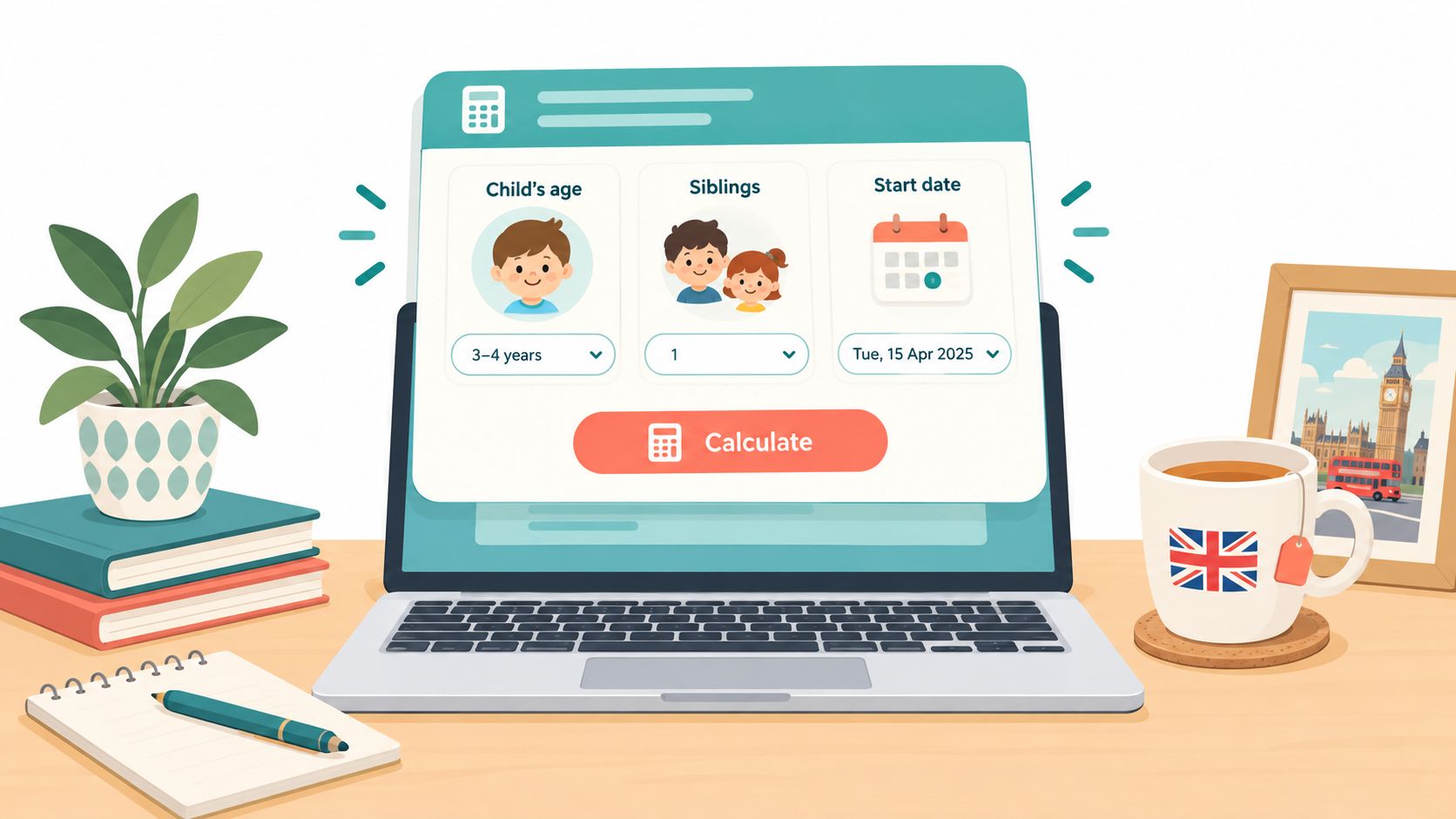
The inputs that matter
A well-built calculator often asks for the following:
- Age band of the child, because the minimum weekly allowance is set by age.
- Number of children, because payments are normally worked out per child, which matters for sibling placements.
- Placement type, such as short-term, long-term, emergency or respite, because the pattern of staying in the home can affect what is received.
- Relevant tax year, because the allowance should be read against the correct April-to-April rates.
How to read the result
The weekly output is useful for day-to-day budgeting. The annual output is better for a broad household view, but it should still be treated carefully. A year-long estimate assumes continuous placement, and real life is often less tidy than that.
Organic Fostering's online calculator estimates weekly and annual payments by age band, which makes it easier to compare options without guessing. Even so, the annual figure remains an estimate because placement gaps, respite periods and changes in age band can all alter what arrives in practice.
A simple way to use the result is to compare it with the household's likely costs, then ask whether the placement type being considered feels sustainable. That keeps the focus on planning, not on assuming the calculator equals guaranteed income.
Worked Examples for Typical Households
A few plain examples usually make the numbers easier to understand. The point isn't to predict an individual household's payment; it's to show how the national minimum works when a child is placed.

One child aged 8
A child aged 8 falls into the 5 to 10 band. The national minimum weekly allowance is £201, and the 52-week estimate is £10,452. That figure is useful for long-term budgeting, but it assumes a full year of placement.
If the placement ran for fewer weeks, the annual amount would be lower because the allowance only applies while the child is placed. That's why annual figures are best treated as planning numbers rather than fixed income.
One teenager aged 13
A child aged 13 falls into the 11 to 15 band. The national minimum weekly allowance is £227, with an estimated annual amount of £11,804. Teenagers often bring different costs from younger children, and the higher age band reflects that broad pattern.
A household thinking about a teenager should still ask whether the space, routines and flexibility at home fit the child's needs. The allowance matters, but matching matters too.
A sibling pair aged 6 and 12
A sibling placement can change the total because the payment is normally worked out per child. In this example, the 6-year-old sits in the 5 to 10 band at £201 a week, while the 12-year-old sits in the 11 to 15 band at £227 a week. Together, that gives a weekly minimum of £428.
That total helps households see why sibling placements need separate thought. If one child leaves the placement earlier than the other, the overall amount changes, and the annual estimate will change with it.
Fostering Allowances and Tax Relief Explained
The figure from a calculator is a gross allowance, not the final tax position. That's why tax treatment needs to sit beside the allowance, not underneath it as an afterthought.
How qualifying care relief changes the picture
HM Revenue & Customs describes qualifying care relief as a system that allows foster carers to receive qualifying payments tax-free up to a set household amount plus a weekly amount for each child in care. For the 2025 to 2026 tax year, the fixed household amount is £19,360, with an extra £405 per week for each child under 11 and £485 per week for each child aged 11 or over. HMRC qualifying care relief guidance
A worked example shows how that works in practice. A household caring for one child aged 12 for a full 52 weeks would have a qualifying amount of £44,580, made up of the £19,360 household amount plus £25,220 from the weekly child element. A household caring for one child aged 8 would have a qualifying amount of £40,420.
Why the tax note matters
Where qualifying care relief covers the receipts, the carer is treated as making neither a profit nor a loss and generally pays no tax or Class 4 National Insurance on the caring income. But that does not mean every pound received is automatically treated the same way. Fees, rewards and allowances are compared with the qualifying amount, and carers whose receipts exceed it may need a simplified or profit-based method.
For that reason, a calculator should not promise a guaranteed net income. It should show the gross weekly and annual payment, then point readers towards tax guidance. For a related explanation of the tax side, see tax allowances for foster carers.
Why a Calculator Estimate Is Not an Income Forecast
It's easy to look at a weekly rate and multiply it by 52. That gives a neat annual number, but it can also create false confidence if it is read as dependable income.

Why occupancy varies
National supply data help explain the risk of overdoing the maths. England had 42,190 fostering households at the end of March 2025, while applications during the year numbered 8,290 and 4,430 mainstream households joined the sector. GOV.UK fostering in England findings
That tells only part of the story. Even where there is approved capacity, matching still decides whether a referral is appropriate. Age, safeguarding, culture, faith, language, disability and household compatibility all matter. A spare bedroom alone does not create a placement.
How to budget more safely
A household can get a better grip on reality by thinking in three ways:
- Conservative use: allow for gaps between placements and shorter stays.
- Typical use: assume placements happen, but not perfectly back to back.
- High use: only consider this if the household can cope with near-continuous placements without relying on them.
A weekly rate is a starting point. It becomes useful only when it sits alongside the likely pattern of placements.
That approach protects families from planning around money that may not arrive in a straight line. It also keeps the focus on the child's needs, because placement matching is about suitability, not just availability.
Allowances, Fees and Skills Payments Compared
A lot of confusion comes from treating every payment as if it were the same thing. It isn't. The allowance covers the child's living costs, while a separate fee or skills payment, where one exists, recognises the carer's role, experience or level of responsibility.
Why two carers can be paid differently
Two approved carers can look similar on paper and still receive different totals. One fostering service may pay a basic allowance only, while another may add a fee or tiered payment. The child's needs and the carer's experience can also affect the total.
That's why any calculator result should be labelled carefully. If it uses only the national baseline, it should say estimated minimum allowance rather than implying that it is the full payment. The same logic applies to sibling placements, because the number of children matters as much as the age band.
Organic Fostering publishes weekly rates by age band under a clear payment policy, and its matching considers culture, faith, language and identity alongside practical household fit. That approach helps keep the payment discussion separate from the placement discussion, which is where it belongs.
What to ask before relying on a figure
- Is this only the minimum allowance? That avoids mixing up the baseline with any additional fee.
- Is the amount shown per child? That matters in sibling placements.
- Does the result change by placement type? Short-term, respite and emergency care may not look the same as a long-term placement.
- Are tax notes included separately? Gross payment and net result are not the same thing.
Clear labelling saves a lot of confusion later. It also helps households judge whether the total is a practical fit for their own circumstances, rather than a vague headline number.
Quick Reference and Next Steps With Organic Fostering
The main figures are straightforward. From 6 April 2026, the Rest of England minimum weekly rates are £176 for ages 0 to 2, £182 for ages 3 to 4, £201 for ages 5 to 10, £227 for ages 11 to 15, and £267 for ages 16 to 17. The annual estimates are based on 52 weeks, but they should always be read as estimates rather than guarantees.
Quick checklist before speaking to an agency
- Check the tax year: rates change with the April review cycle.
- Ask whether the figure is minimum allowance or total pay: fees may sit separately.
- Confirm whether the total is per child: that matters for sibling groups.
- Ask how respite, gaps and age changes are treated: annual figures can shift.
- Read the tax note carefully: gross payment and net income are not the same thing.
If a number looks tidy, ask what assumptions sit underneath it.
Short FAQ
Do fostering allowances affect benefits?
In England, fostering payments can be treated differently from ordinary earnings, so it's sensible to check benefits guidance before relying on any estimate. A household should always confirm its own position with the relevant benefits rules.
What happens during respite or placement gaps?
Payments can change if there's no child in placement or if the arrangement is temporary. That's another reason a calculator should be treated as an estimate, not a promise.
Why do two households with the same age band get different totals?
The service used, the child's needs and the carer's skills and experience can all affect the total payment.
If a household wants to compare the numbers with the reality of fostering in Manchester or the North West, it helps to ask an agency for a clear explanation of allowances, fees and matching. An informal conversation through Organic Fostering's enquiry page can be a sensible next step for anyone weighing up whether fostering could fit their home and finances.
Organic Fostering supports people across Manchester and the North West who want a clear, honest view of fostering allowances, tax and the practical side of caring for children. If the numbers are the bit that's holding things back, take a look at Organic Fostering and explore the allowance calculator alongside an informal chat about whether fostering could suit your household.