

A prospective foster carer in Greater Manchester may finish a home study visit feeling excited, then sit at the kitchen table worrying about figures. The question is often simple but heavy with consequences: will the fostering allowance count as taxable income, and could it affect an existing salary, tax position or child benefit?
The answer depends on how the household applies Qualifying Care Relief, the special tax treatment for foster carers. Most fostering income is usually exempt from Income Tax and Class 4 National Insurance when receipts remain within the relevant relief framework, although each household still needs accurate records and may need to complete a tax return. HMRC's guidance for foster carers explains the rules.
The tax position should be understood before the first placement, not reconstructed months later. Placement dates, children's ages, receipts and the method used to calculate relief can all affect whether any amount remains taxable. The following guide explains the relief, the two calculation methods, sensible record-keeping and the points that tend to cause the most confusion.
Table of Contents
- Why Tax Rules Matter When You Start Fostering
- How Qualifying Care Relief Works
- The Simplified Method and the Actual Expenses Method
- Records Foster Carers Should Keep From Day One
- Common Scenarios in a Fostering Household
- Self-Assessment and Your Tax Return
- Common Misconceptions About Foster Carer Tax
- Putting the Tax Picture Together
Why Tax Rules Matter When You Start Fostering
A household considering fostering may already be working through practical questions about a spare bedroom, training, household routines and how a child's identity and relationships will be respected. Tax can feel like one more complicated barrier, particularly when the proposed carer already has employment income.
The important distinction is that fostering receipts are dealt with under a specific HMRC framework. Most foster carers are treated as self-employed for tax purposes, but their fostering income is usually exempt from Income Tax and Class 4 National Insurance when it stays within Qualifying Care Relief. HMRC's National Insurance guidance confirms both the self-employed treatment and the relief available.
That doesn't mean a carer can ignore the money received. A foster carer should keep a clear record of every payment, placement period and relevant cost. The relief is calculated against the household's care receipts, so the number and age of children placed, together with the weeks they stay, matter more than a simple annual salary comparison.
Practical rule: A payment can be tax-exempt under Qualifying Care Relief and still need to appear in the household's tax records.
Someone preparing for approval can use the fostering assessment and preparation information to understand the wider route into fostering, while arranging separate tax guidance if personal circumstances are complex. Employment income, property income, pension income and benefits can each involve different rules.
The safest approach is organised rather than anxious. First identify the current Qualifying Care Relief figures, then record occupancy and receipts, choose the calculation method carefully, and keep the working papers that support the return. That sequence gives a new carer a reliable basis for deciding whether any fostering profit is left after relief.
How Qualifying Care Relief Works
A new foster carer might receive payments during one week, have no placement the next, then welcome two children with different ages. Qualifying Care Relief handles that changing pattern through one household allowance and a weekly allowance linked to each child's care.
For 2025/26, the fixed household amount is £19,690. The weekly amount is £415 for each child under 11 and £495 for each child aged 11 or over. For 2026/27, HMRC publishes the same figures in The 2026/27 HMRC guidance, which should be checked when preparing the relevant return.
The calculation works in two stages:
| Component | Amount | How it is measured |
|---|---|---|
| Household relief | £19,690 | Once per household for 2025/26 and 2026/27 |
| Child under 11 | £415 weekly | For each qualifying week |
| Child aged 11 or over | £495 weekly | For each qualifying week |
The household amount is applied once, whether one child is placed or several. The weekly amount is then added for every child and every qualifying week. A child's age band changes the weekly figure, while the household amount does not increase with the number of placements.
The relief is a calculation, not a payment from HMRC. It identifies the amount of care receipts treated as covered for tax purposes. If the household receives more than the available relief, the excess may need to be considered under normal tax rules.
The weekly calculation follows the care provided, not an estimate based on calendar months. For example, a short stay, respite arrangement or placement ending part-way through a week can change the result. Record the placement dates and changes alongside the agency's payment records, so the pounds received can be matched to the weeks of care.
Household decisions therefore affect the tax calculation. The mix of younger and older children changes the weekly relief, while the number of occupied weeks determines how often that relief is added. A placement diary, payment log and clear understanding of the fostering allowance give you the working information needed to apply the rules.
The Simplified Method and the Actual Expenses Method
A foster carer generally considers two ways to calculate the taxable result. The simplified method uses the Qualifying Care Relief figures as the household's deemed expense calculation. The actual expenses method instead examines the genuine costs incurred in providing care, supported by records.
The simplified route is easier to administer. The household records its fostering receipts and placement details, then applies the relevant fixed and weekly relief. For many carers, that approach is practical because it avoids allocating every household bill between personal and fostering use.
The actual method can be more suitable where genuine fostering costs are substantial. Potential categories may include additional food, utilities, travel, mileage, room preparation and other costs connected with providing care. A carer must be able to show that a cost relates to fostering and explain any division between private use and care-related use.
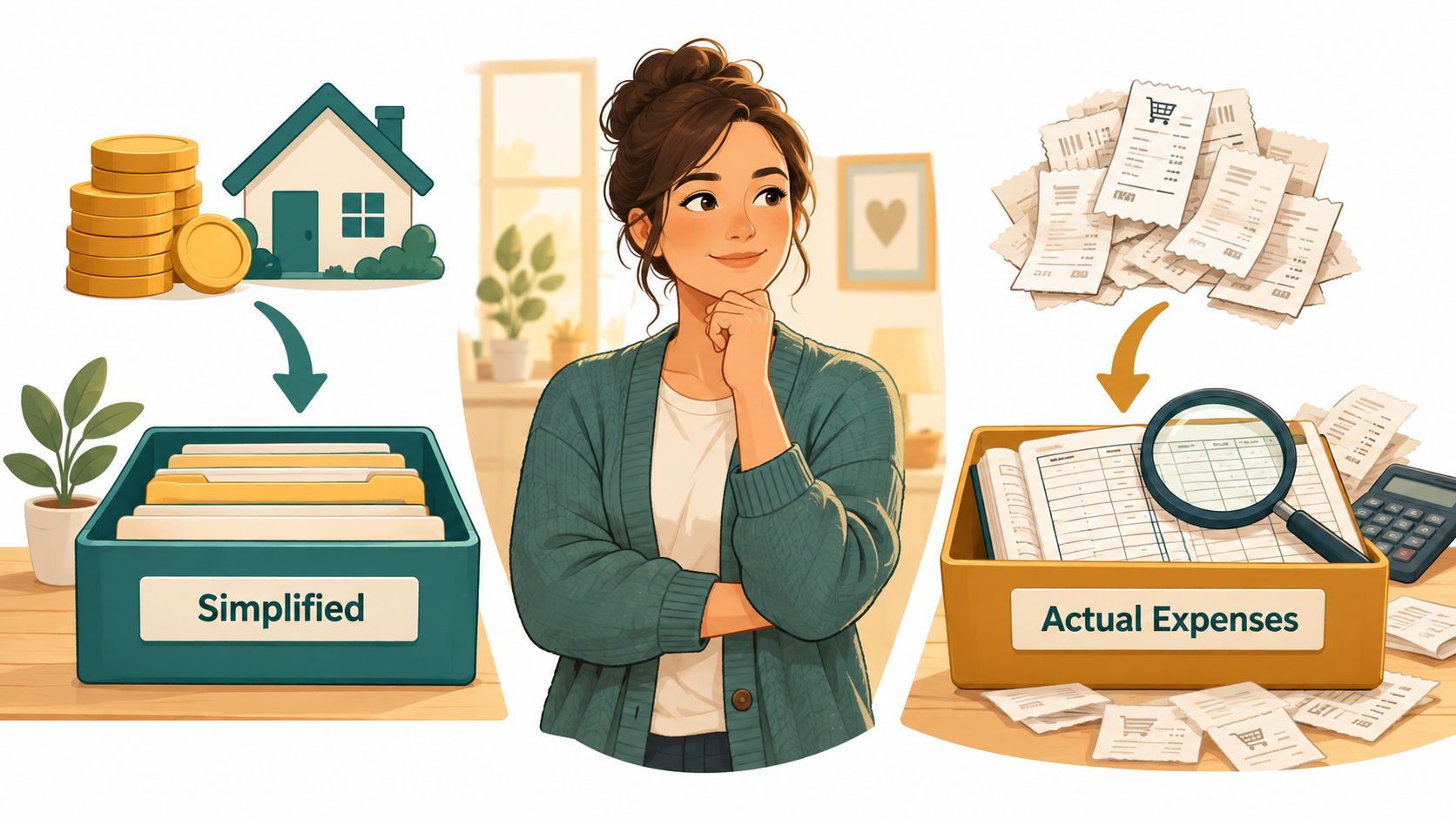
Choosing the method
A household with limited placement activity may value the simplicity of the deemed calculation. A household with several placements, substantial travel or unusually high care-related expenditure may want to compare the result with actual costs.
That comparison should happen before a return is submitted. Changing approaches between tax years can affect the working papers and the way costs are supported, so a carer should avoid switching casually. Where circumstances change, the reason for the change should be recorded and professional advice may be sensible.
Receipts matter most under the actual method, but payment records and placement evidence remain important under either method. HMRC's guidance on foster carer tax treatment should be checked for the current treatment and figures. An allowance calculator can also help a household model likely receipts before discussing the figures with an accountant, such as the fostering allowance calculator.
Records Foster Carers Should Keep From Day One
Good records don't need to be elaborate. They need to be dated, complete and easy to match with the amounts received. A new carer can create a simple digital folder before approval and add documents as the fostering relationship develops.
Start with the care documents
The first folder should contain the foster care agreement, approval information and placement paperwork supplied by the agency. The placement schedule should show when each child arrived, when care ended, and whether there were changes such as respite, a move or a handover to another carer.
Payment records come next. Keep weekly board and lodging information, fostering fees, top-up payments, bonuses and any other amount connected with care. The exact payment structure varies, so the household should retain the statement or remittance advice rather than relying on a bank entry alone.
A dated diary is particularly useful when a placement changes during a week. It helps explain why an agency payment doesn't appear to match a simple month-by-month calculation.
Add household costs and supporting evidence
A running costs log can include additional food, utilities, travel, mileage, school-related purchases, activities and room-related expenditure. Personal and fostering use should be separated clearly. A bed or desk may be relevant to the actual method, but the receipt and the reason for the purchase should be retained.

Digital records are acceptable as a practical organising system. A phone photograph of a paper receipt can be stored with the date, category and reason for the expense. The household should also keep copies of submitted returns and calculations, and follow the retention period that applies to its tax records rather than deleting files as soon as a return is filed.
Training and supervision records can help keep the broader fostering file organised too. Information about training for foster carers belongs with the care documents, while tax receipts and calculations should remain easy to locate separately.
Common Scenarios in a Fostering Household
The mechanics become easier when the household separates the fixed amount from the weekly amount. The fixed relief is applied once, then each child contributes a weekly figure according to age and qualifying care weeks.
Consider a Manchester carer looking after one child under 11. For a full tax year, the household adds the fixed £19,690 to the weekly relief generated by that child. At £415 per week, the weekly element is then compared with the household's actual care receipts. If the receipts stay within the combined relief, the fostering income is treated as nil for Income Tax and Class 4 National Insurance purposes under the relief framework.
A sibling placement produces a different pattern. The household amount remains a single amount, but the weekly relief is calculated for each child. Two children in the same age band therefore create two weekly entries, while a placement lasting only part of the tax year creates fewer qualifying weeks than a continuous arrangement.
Age changes also matter. A mixed household with a teenager and a younger child uses £495 for each qualifying week for the older child and £415 for each qualifying week for the younger child. A short respite placement adds only the qualifying weeks provided, so the diary needs to capture the start and end dates accurately.
| Scenario | Children | Weeks cared | Weekly relief | Taxable profit |
|---|---|---|---|---|
| Single placement | One child under 11 | Actual qualifying weeks | £415 per qualifying week | None if total receipts remain within relief |
| Sibling placement | Two children | Actual qualifying weeks for each child | £415 per child per qualifying week if both are under 11 | Depends on receipts and the total relief |
| Mixed-age household | A teenager and a younger child | Separate records for each stay | £495 for the teenager and £415 for the younger child | Depends on receipts and the total relief |
This is why a household shouldn't estimate tax from a weekly allowance alone. Placement mix, age, occupancy and the household amount work together. When receipts exceed the available relief, the household should review whether a tax return or further calculation is required. The main types of foster care can involve different patterns of stay, so the record-keeping approach should reflect the placement arrangement.
Self-Assessment and Your Tax Return
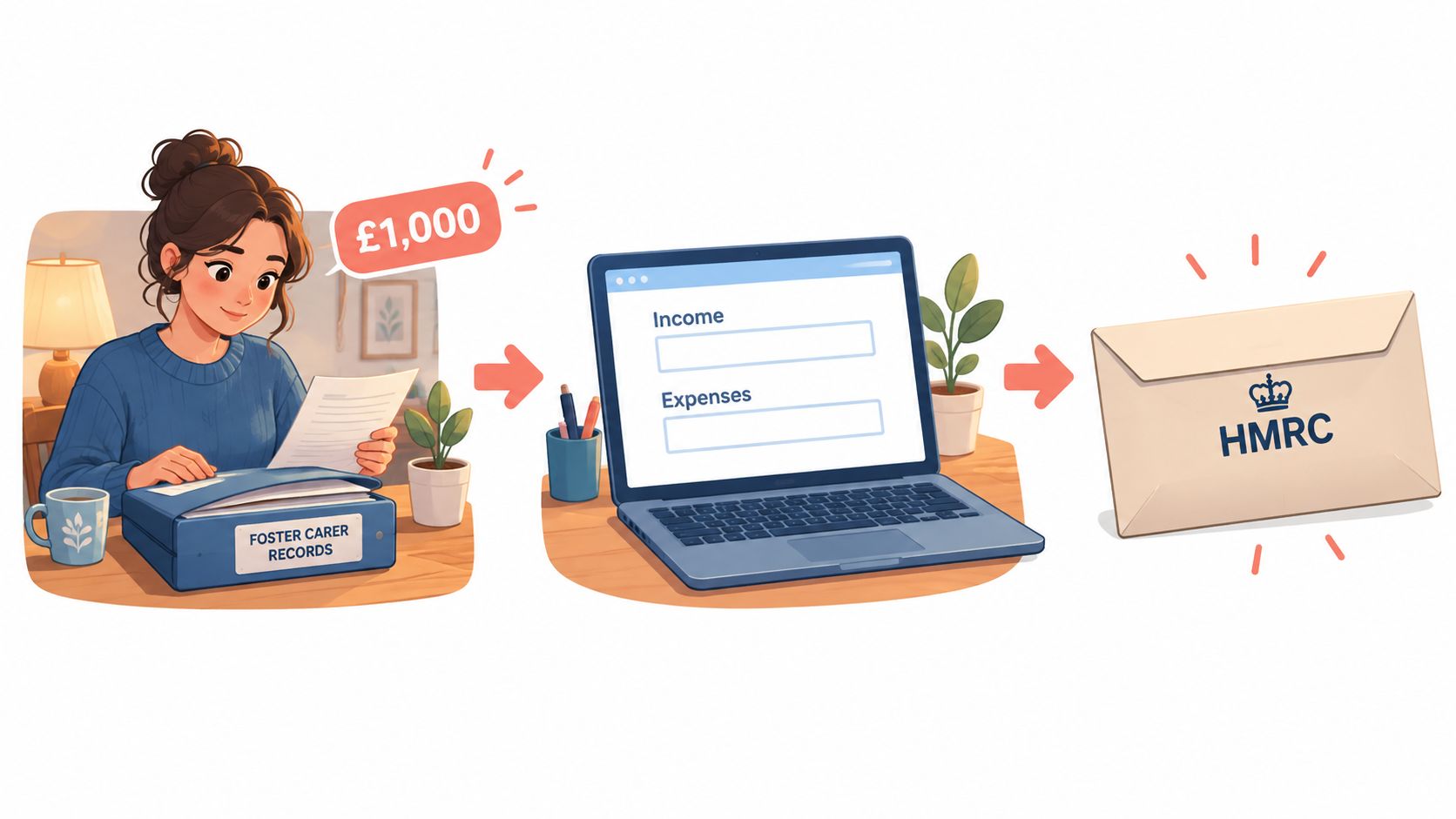
A foster carer can face a tax return after a year that felt like a series of separate placements. The practical task is to bring together the payment statements, placement diary and Qualifying Care Relief calculation, then check that the figures agree.
Check your registration and filing position with HMRC when fostering income begins. Relief may reduce the taxable amount to nil, but that does not automatically answer whether registration or reporting is required. The position may also change if you have employment income, property income or another self-employed activity.
Preparing the figures
Enter the household's actual fostering receipts for the relevant tax year, alongside the relief calculation based on the household amount and qualifying weeks. Your diary is the bridge between those two figures. It shows which placements produced the receipts and which weeks belong in the calculation.
If you use the actual expenses method, keep the cost log and receipts with the return paperwork. Record costs as they arise rather than entering a rounded estimate because the final tax bill looks likely to be small. A nil result still needs figures that can be explained.
HMRC guidance explains that receipts within the qualifying amount are treated as nil for Income Tax and Class 4 National Insurance purposes. If receipts exceed the amount covered, the carer can use the simplified method or a normal calculation based on actual expenses and capital allowances, depending on the circumstances. The National Insurance manual sets out this distinction.
Save a copy of the submitted return beside the calculation behind it. If HMRC asks how you reached the figures, you can show the dates, receipts and relief calculation without rebuilding the year from bank statements.
An accountant or tax adviser familiar with fostering can review complicated figures. Check HMRC's guidance before filing, since relief amounts and administrative requirements may change.
Common Misconceptions About Foster Carer Tax
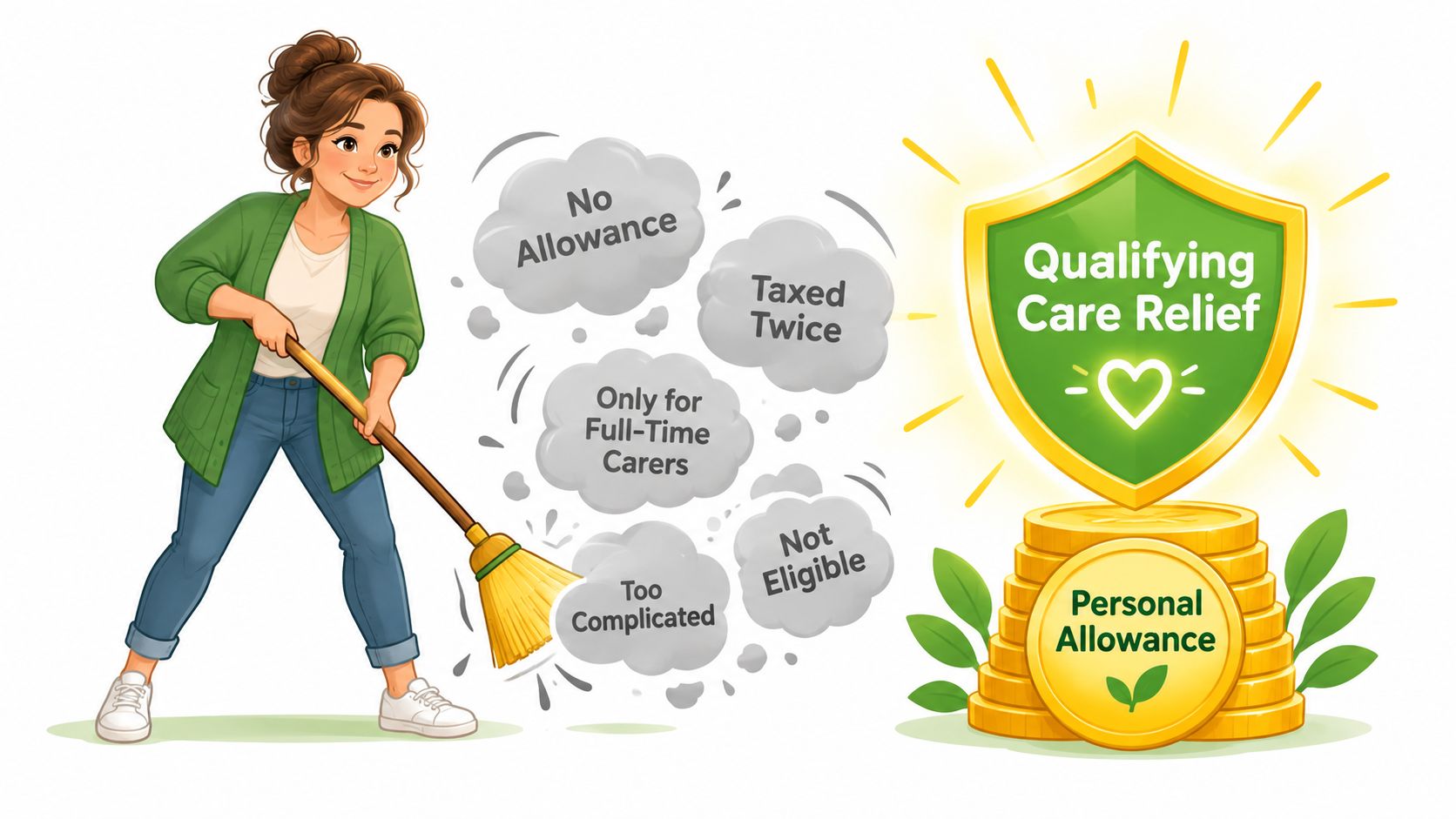
A common worry is that Qualifying Care Relief uses up a carer's ordinary Personal Allowance. The relief is a separate calculation for qualifying care receipts. It doesn't mean that employment income automatically loses its own tax treatment, although the household's full circumstances still need to be considered.
Another misunderstanding is that every fostering receipt is automatically tax-free. The relief covers qualifying care receipts up to the amount produced by the household and weekly calculations. Receipts above that amount need further consideration, so “tax-free fostering” should never be treated as a reason to stop keeping records.
A sale of the family home also needs careful, individual advice. Tax on a property sale depends on the property's history, use and ownership circumstances. A foster carer shouldn't assume that fostering alone creates a Capital Gains Tax charge, but shouldn't rely on a general statement where a sale is being planned.
There's also confusion about whether provisional approval prevents a carer from using the relief. HMRC's foster care guidance addresses foster carers and related qualifying care arrangements, so a person in the approval process should check the precise point at which their receipts qualify rather than rely on informal advice.
Finally, fostering income shouldn't be assessed in isolation from child benefit or other household income. The safest answer comes from considering the complete tax position, not from assuming that a tax-exempt fostering receipt has no possible effect on any other calculation.
Putting the Tax Picture Together
The practical tax picture varies between households across Manchester, Liverpool and Lancashire towns because placement patterns, household sizes and agency payment arrangements differ. A carer caring for one child for a steady period may have a very different calculation from a household supporting siblings, providing respite or caring for children in different age bands.
The central point remains straightforward. Qualifying Care Relief can cover fostering receipts in full, but the household must calculate the relief using the correct fixed amount, age-based weekly amounts and qualifying care weeks. If receipts go beyond that figure, the excess should be reviewed rather than ignored.
Weekly administration prevents most avoidable confusion:
- Record placement changes: Note arrivals, departures, respite and handovers promptly.
- Match payments: Keep agency statements beside the placement schedule.
- Review the method: Compare simplified and actual expenses where costs or placement activity change.
- Keep the calculation: Save the figures used for any Self-Assessment return.
HMRC's guidance should remain the final reference point, particularly where a household has several income sources or an unusual placement arrangement. A tax adviser can also check whether the chosen method reflects the household's actual circumstances.
Bookmarking this guide and reviewing the records before the first filing deadline can make the process calmer. The aim isn't to predict every future payment. It's to make sure each payment, week and calculation has a clear place in the household's records.
Organic Fostering offers informal conversations for adults exploring fostering and for experienced carers considering a transfer, with guidance on assessment, training, allowances and ongoing support. Visit Organic Fostering to discuss the fostering role and the tax questions that may matter to the household, with no obligation to proceed.