

How much of a fostering allowance is taxable? It sounds like something a calculator should settle in one click, and most don't. They take a weekly rate, multiply by 52 and hand back a total that reads like income, leaving the reader to assume the tax question resolves itself somewhere else.
It doesn't. HMRC tests fostering receipts against Qualifying Care Relief (QCR), a relief built from a fixed household amount plus a weekly amount for each child or adult in placement. What that produces is a tax threshold, and a threshold is not a wage. Many households in England land below it and pay no Income Tax on their caring income. Many land above it and owe tax on the difference.
The allowance calculator tax question many people ask is "what will I receive?", when the more consequential one is "will this be taxed at all, and on how much?". The two answers can differ by thousands of pounds, and a rate applied to the wrong tax year can flip a tax-free placement into a taxable one.
Three pieces of information keep the estimate honest: the tax year, the weeks cared for, and the receipts the agency paid. Everything below is built on those.
Table of Contents
- Qualifying Care Relief Figures by Tax Year
- Estimating Taxable Fostering Income Step by Step
- Weeks, Age Changes and Tax Year Boundaries
- Other Income and the Personal Allowance
- Records and Self Assessment to Prepare
- Check Your Estimate Before You Plan Your Budget
Qualifying Care Relief Figures by Tax Year
Fostering income in England is tested against Qualifying Care Relief, the relief HMRC provides for foster carers. It works like a tax threshold rather than a pay rate. It has two parts: a fixed amount for the household and a weekly amount for each child or adult in placement. Both can change with the tax year, and the UK tax year runs from 6 April to 5 April rather than following the calendar.
For the 2026-27 tax year, HMRC's published figures are £20,440 a year per household, £435 a week for a child under 11, and £515 a week for a child aged 11 or over or an adult, as set out in the HMRC rates and allowances annex for 2026. That year runs from 6 April 2026 to the current tax year end date of 5 April 2027.
| Tax year | Household fixed amount | Weekly, child under 11 | Weekly, child aged 11+ or adult | Status |
|---|---|---|---|---|
| 2002-03 to 2022-23 | £10,000 | £200 | £250 | Historic rates |
| 2023-24 | £18,140 | £375 | £450 | Past tax year |
| 2024-25 | Inflation-uplifted | Inflation-uplifted | Inflation-uplifted | Published HMRC figure needed |
| 2025-26 | £19,690 | £415 | £495 | Past tax year |
| 2026-27 | £20,440 | £435 | £515 | Current tax year |
The numbers have moved sharply, which is why older articles mislead. From 2002-03 through 2022-23 the household amount sat at £10,000, with £200 and £250 weekly. The HMRC Business Income Manual records those historic rates and the 2023-24 reform. That reform raised the fixed amount to £18,140, the under-11 rate to £375 and the older-child and adult rate to £450. From 2024-25 onward the rates were increased in line with CPI inflation, so that row gives a description rather than a figure. The uplift is set by the inflation measure, and the exact published rates for that year should be read from HMRC rather than inferred.
These are UK-wide figures for tax relief, not a statement of what any agency pays. Fostering allowances, eligibility and placement terms depend on individual circumstances, the child's needs, the placement and the carer's experience. Allowances may also vary by region and are subject to change. Current payment schedules and individual placement information take precedence over allowance calculator results. Foster carer payments are intended to meet the costs of care and may include a professional fee, and carers receive payments for active placements. What carers are paid, and why amounts vary, is covered separately in do you get paid to foster a child.
The practical habit is to choose the tax year before running any arithmetic. Say a household received £45,000 in care receipts for a year with one secondary-school-age child. Against the older thresholds that level of receipt would have sat well above the relief. Against the current household amount plus 52 weekly amounts it may fall under. Same money, different answer, because the figures moved. An estimate is a guide to the likely tax position, not a placement, income guarantee or full calculation of extra payments, expenses and tax.
Estimating Taxable Fostering Income Step by Step
The arithmetic fits in a spreadsheet and takes about ten minutes. Doing it once with real dates and real payment statements tells you more than any headline weekly rate, because it forces you to name the weeks. Think of the calculation as a check on the whole year's care receipts, rather than a simple weekly rate multiplied out.
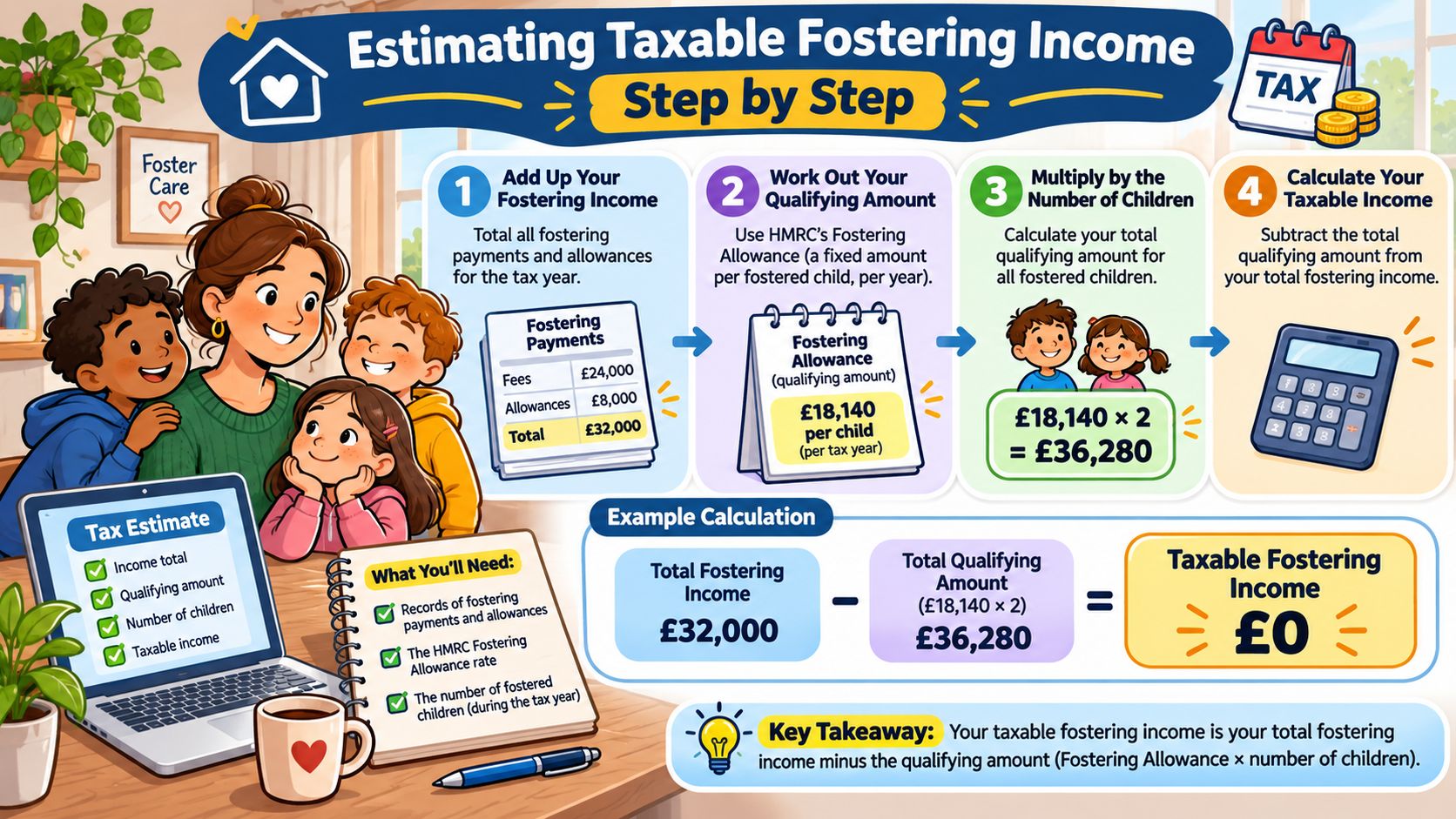
The six steps in order
The allowance calculator on the Organic Fostering website can help with the allowance side of this picture, especially when you are comparing age bands and weeks of care. For the tax calculation itself, use these six steps in order. More background on payments is in how fostering allowances are worked out.
1. Fix the tax year. Write the year down first, 6 April to 5 April, and note its household fixed amount. Every later figure depends on this choice.
2. Count weeks by age band. For each child, count the weeks cared for inside that tax year, then split them into weeks when the child was under 11 and weeks when the child was 11 or over. A birthday in-year moves a child from one band to the other.
3. Multiply each group. Under-11 weeks times the under-11 weekly amount, 11-or-over weeks times the older-child amount. Adults in placement use the older-child rate.
4. Add the household amount. Fixed amount plus under-11 total plus 11-or-over total gives the qualifying amount.
5. Total your care receipts for the same period. That means everything the agency paid for the caring role: the allowance that meets the child's costs and any fee paid to the carer. Foster carer payments are intended to meet the costs of care and may include a professional fee. It is not the advertised base rate, and not the amount before a fee was added.
6. Compare the two figures. Receipts at or below the qualifying amount, or above it. That comparison decides which of three outcomes applies. A calculator should test total care receipts against the qualifying amount for the correct tax year and return a taxable-excess estimate. It should not multiply a weekly rate by 52 and call the result tax-free income.
What the result can mean
Using the 2026-27 figures, one child under 11 in placement for all 52 weeks gives £20,440 + (52 × £435) = £43,060. The same 52 weeks for a child aged 11 or over gives £20,440 + (52 × £515) = £47,220. Identical household, identical weeks, £4,160 more relief, purely from the age band.
Where total care receipts don't exceed the qualifying amount, HMRC's HS236 helpsheet treats the carer as making neither a profit nor a loss for the year, so no Income Tax or Class 4 National Insurance is due on the caring income under that calculation. Where receipts do exceed it, the simplified method taxes only the difference between total receipts and the qualifying amount.
A third route exists. The profit method reduces total care receipts by allowable expenses and capital allowances instead. It can suit a household with substantial genuine costs and disciplined record keeping, and it requires receipts for everything claimed.
The key distinction is straightforward. The qualifying amount is a tax threshold. It isn't a fostering allowance, and it isn't a guaranteed income.
Keeping the payment types apart
Five numbers get tangled together in this conversation. The national minimum allowance is the published guidance figure for what caring for a child is expected to cost. An agency's approved allowance is its own schedule, and Organic Fostering publishes its rates by age band under a clear payment policy. A carer fee is paid for the professional role rather than the child's costs. Extras cover specific needs, such as a larger bedroom or travel. Tax relief is the HMRC threshold, and it is calculated on care receipts, not on the advertised base rate alone.
Mixing those up produces two opposite errors: treating a threshold as income, or treating a weekly payment as entirely tax-free without testing it.
A calculator built for this job says what it has produced: an estimate of taxable caring profit, with the receipts, the weeks and the tax year printed next to it, so the reader can see which inputs produced which number and challenge them.
Weeks, Age Changes and Tax Year Boundaries
The most common error in fostering tax estimates is multiplying a weekly rate by 52 and treating the result as the year's relief. Weekly amounts attach to weeks of actual care, and a 52-week assumption builds in a placement that never happened.
HMRC applies qualifying care relief on a tax-year basis, from 6 April to 5 April, and its guidance for carers includes examples where a household's accounting year differs from the tax year and must use the figures for the accounting period shown on the return, as the HS236 helpsheet on Qualifying Care Relief sets out.
Irregular placements make the timeline the only reliable record. An emergency placement that ends at short notice, a short-term arrangement, a respite gap between two children, two siblings sharing a home for part of the year, or a placement that finishes mid-week all change the count. So does a child's eleventh birthday: the weekly rate for that child changes for the weeks after that date, and a calculator that works from a single age-band headline will overstate or understate relief depending on when the birthday fell.
What the timeline should hold
- Start and end dates for every placement in the year, including part weeks.
- The child's age on each date, not just at the start of the year.
- Weeks in care for that period, split by age band.
- Receipts received for that period, so the money and the weeks line up.
Payments attach to active placements, so a month with no child in the household adds nothing at the weekly rate. Building the timeline as the year runs, rather than reconstructing it in January, also gives you an exportable record for Self Assessment, and HMRC's own guidance is the place to confirm any treatment you're unsure about.
Other Income and the Personal Allowance
Qualifying Care Relief doesn't operate in isolation. It sits in front of the general Income Tax system, and the order of the calculation changes the answer.
Apply the relief to fostering receipts first, which produces either no taxable caring profit or a taxable excess. Then add other taxable income, such as employment, a pension, savings income or another self-employment. Only after that do the Personal Allowance and the tax bands come into play.
For 2026-27, HMRC's published Income Tax rates and allowances put the standard Personal Allowance at £12,570. It is a general allowance, not an additional fostering-specific exemption, and it does not replace Qualifying Care Relief.
| Income Tax band | Taxable income | Rate |
|---|---|---|
| Personal Allowance | Up to £12,570 | 0% |
| Basic rate | £12,571 to £50,270 | 20% |
| Higher rate | £50,271 to £125,140 | 40% |
| Additional rate | Above £125,140 | 45% |
Those are the main bands published for the rest of the UK. Scottish taxpayers have different Income Tax rates and bands, so this table doesn't apply to them. The Personal Allowance is also subject to an income limit of £100,000, so a carer whose other income is high may see a different result from a household on a modest second income.
A calculator must not subtract £12,570 from fostering receipts as though that were the only relevant rule. Doing so ignores the relief that applies first, and it mixes two different parts of the system.
Order of operations: relief on the caring income, then other income, then the allowance, then the bands. Reverse that and the estimate flatters or penalises the household for no reason.
These are UK-wide figures for a given tax year. They don't by themselves calculate anyone's final Self Assessment liability, and the interaction with other income is where personal circumstances start to matter. Carers combining fostering with paid employment can read more about how the two fit together in can you work and be a foster parent.
Records and Self Assessment to Prepare
For tax purposes, foster carers are generally treated as self-employed, which normally means registering with HMRC and completing a Self Assessment return, the annual tax return used by self-employed people and others with extra income to declare. That obligation stands even when Qualifying Care Relief reduces the taxable excess to zero, because the income still has to be reported.
Good records turn a stressful January into an hour's work. Four sets of paperwork cover almost every situation.
- A week-by-week placement record. Each child's start and end dates, their age on each date, the weeks in care, and the receipts for each period.
- The agency's payment statements. Every allowance payment and any professional fee, matched to the tax year the payment falls in.
- Other income. Employment, pension, savings or a second self-employment, since these feed into the same return.
- Expense evidence, if the profit method applies. Receipts for allowable costs with a note of how each one relates to the caring role.
Match the records to the tax year in which the payments fall and to the accounting period used on the return. The two aren't always identical, and a mismatch is the kind of thing that turns a simple return into correspondence.
Keep the records in a form a tax estimate can use. A sound calculation compares total care receipts for the tax year with that year's qualifying amount and reports any excess as the taxable figure. A weekly rate multiplied by 52 and labelled tax-free skips that test entirely. Week-by-week records are what make the comparison possible, because they show which receipts belong to which year.
Some situations justify individual advice before filing: a household with more than one income source, a carer who moved between agencies mid-year, or uncertainty about which receipts count as fostering receipts. A qualified accountant, or HMRC directly, can confirm the position, since general guidance does not replace individual tax advice.
Organic Fostering's website includes an allowance calculator, alongside information and links on how fostering income is treated for UK tax, so the payment side of the estimate is documented in one place. Carers who are newly self-employed and unsure how the return fits around a fostering household can read whether foster carers are classed as self-employed.
Check Your Estimate Before You Plan Your Budget
Run the numbers before you build a budget around them. Organic Fostering's allowance calculator estimates the weekly and annual allowance for one child for between 1 and 52 weeks of care, across four age bands: 0-4, 5-10, 11-14 and 15+.
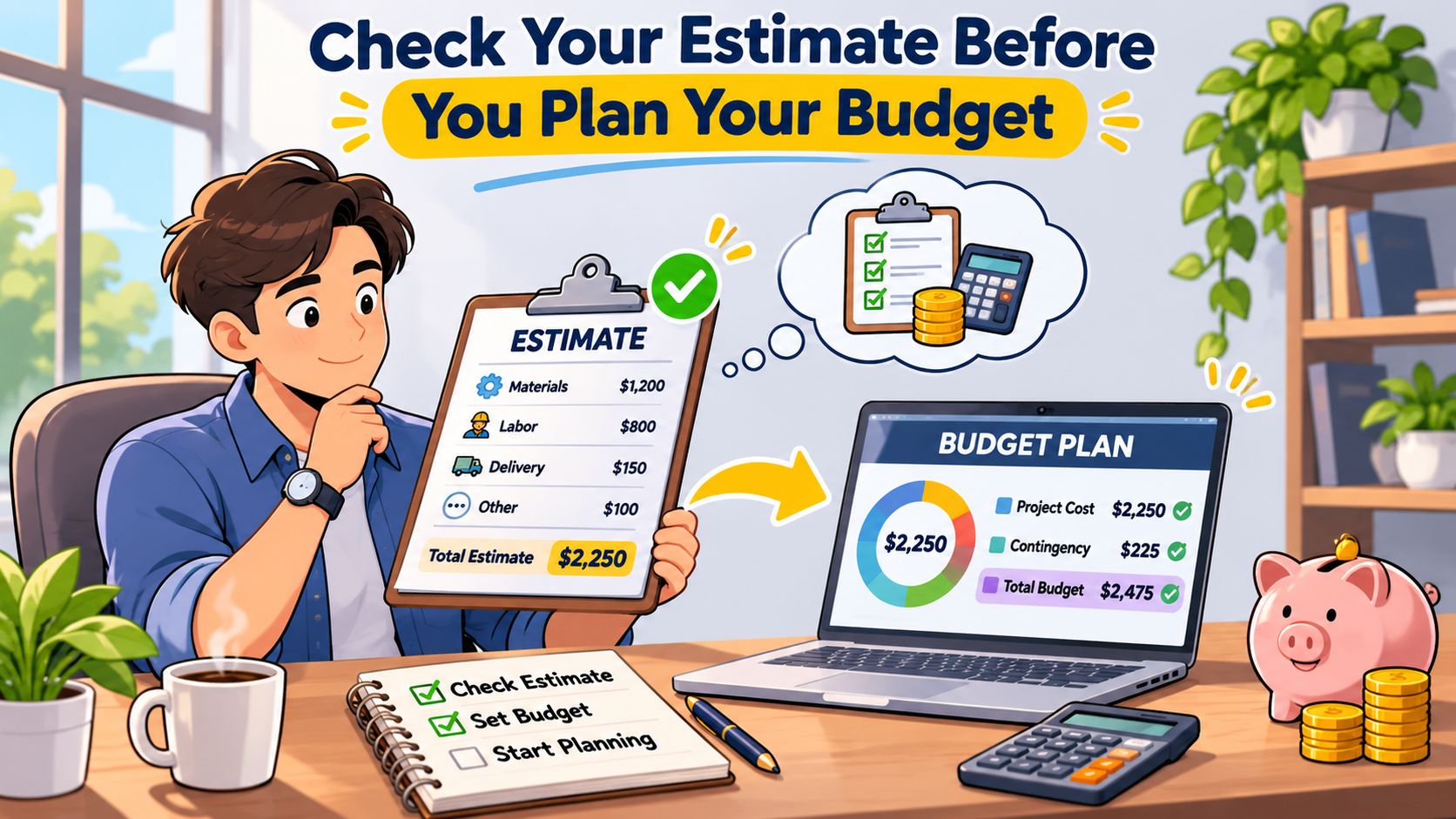
The calculator's bands differ from HMRC's under-11 and 11-or-over split, so convert before applying relief. A child in the 11-14 band counts wholly against the older-child rate. A child who turned 11 during the year straddles both, and the weeks must be split accordingly. Treat the calculator's output as the payment side of the estimate only.
Three checks that keep the figure honest
The schedule wins. Current payment schedules and individual placement information take precedence over any calculator result.
The tax year must match. Confirm the household amount and weekly amounts for the year in question on HMRC before comparing them with receipts.
The annual total is the figure under test. A calculator that multiplies a weekly rate across the year and labels the result tax-free skips the key question: whether total care receipts for that tax year sit above or below the qualifying amount.
If the annual figure sits below the qualifying amount for the year, the simplified calculation shows no taxable caring profit. If it sits above, only the excess is in scope under that method. The limits flagged earlier in the calculation still stand; these checks settle whether the number being tested is the right one.
The calm version of this: an estimate tells you what a placement might pay and roughly where it sits against a threshold. Your final position still depends on the rest of the household's income and on the records you keep.
Questions about how the agency's payment policy works alongside the relief belong in a direct enquiry, where an informal first conversation comes without obligation. If you're still weighing up whether to start at all, why become a foster carer covers the decision from the household's side.
Organic Fostering is an Ofsted-registered independent fostering agency based in Manchester, supporting foster carers across the North West with a transparent allowance policy, an online calculator and a supervising social worker for every household. If the tax side of fostering is part of your decision, the team can talk through how the agency's payments work alongside Qualifying Care Relief before you commit to anything. Visit Organic Fostering to read the current allowance policy and start an informal conversation.