

It's late in the evening in Greater Manchester. A foster carer is thinking about tomorrow's school run: a child has found the journey overwhelming, the household's usual routine hasn't helped, and the carer wonders whether another fostering family has faced something similar. The immediate need might be a practical suggestion, or just a conversation with someone who understands.
A foster carer support group can offer that connection. It sits alongside supervision, training and professional advice, rather than replacing them. A supervising social worker is the professional who supports and supervises the fostering household, while a kinship carer is a relative or someone already connected to a child who takes on their care.
Support can come through national organisations, a Mockingbird constellation, local agency groups, specialist kinship networks, Organic Fostering, community organisations or moderated online spaces. Availability varies across Manchester and the North West, so current arrangements need checking locally.
Confidentiality matters from the first conversation. Carers can discuss their own feelings and general challenges without sharing children's names, schools, photographs or identifying family circumstances. A supportive setting isn't permission to disclose a child's private history.
Table of Contents
- 1. The Fostering Network Membership, Advice and Local Foster Carer Groups
- 2. Mockingbird Family Model Hub Carers and Constellation Peer Support
- 3. Local Foster Carer Support Groups and Agency Forums
- 4. Kinship Support for Family and Friends Carers
- 5. Organic Fostering Carer Connections, Supervision and Ongoing Support
- 6. Faith, Cultural and Language Community Networks
- 7. Moderated Online Foster Carer Communities
- How the foster carer support options compare at a glance
- Building Your Support Network Step by Step
1. The Fostering Network Membership, Advice and Local Foster Carer Groups
The Fostering Network is a UK charity supporting foster carers, fostering households and the wider fostering community. Its membership, information and advice offer a national starting point for carers who want to understand fostering practice or find routes into peer support.

The charity's reach includes policy work and public campaigns such as Foster Care Fortnight, alongside resources carers can use when preparing for supervision or reviews. Its 2024 State of the Nations survey included more than 3,000 current and former foster carers and 114 fostering services, giving a broad view of fostering experiences across the UK.
When national advice helps
Say a carer is uncertain about how to raise a disagreement over professional expectations. National information can help clarify the issue and prepare focused questions, while a local peer group may offer reassurance about having that conversation constructively.
The distinction matters: national membership isn't the same as an available local meeting. Benefits, charges, advice arrangements and access to groups should be confirmed before joining.
- Availability: The fostering service can explain whether membership is included and which local networks it recommends.
- Confidentiality: Advice enquiries should contain only the information needed, using the organisation's agreed contact route.
- Alongside supervision: Significant concerns and advice affecting a placement should be discussed with the supervising social worker.
A national organisation offers perspective beyond an individual service. It can't authorise changes to a child's care plan or replace the professionals responsible for that child.
2. Mockingbird Family Model Hub Carers and Constellation Peer Support
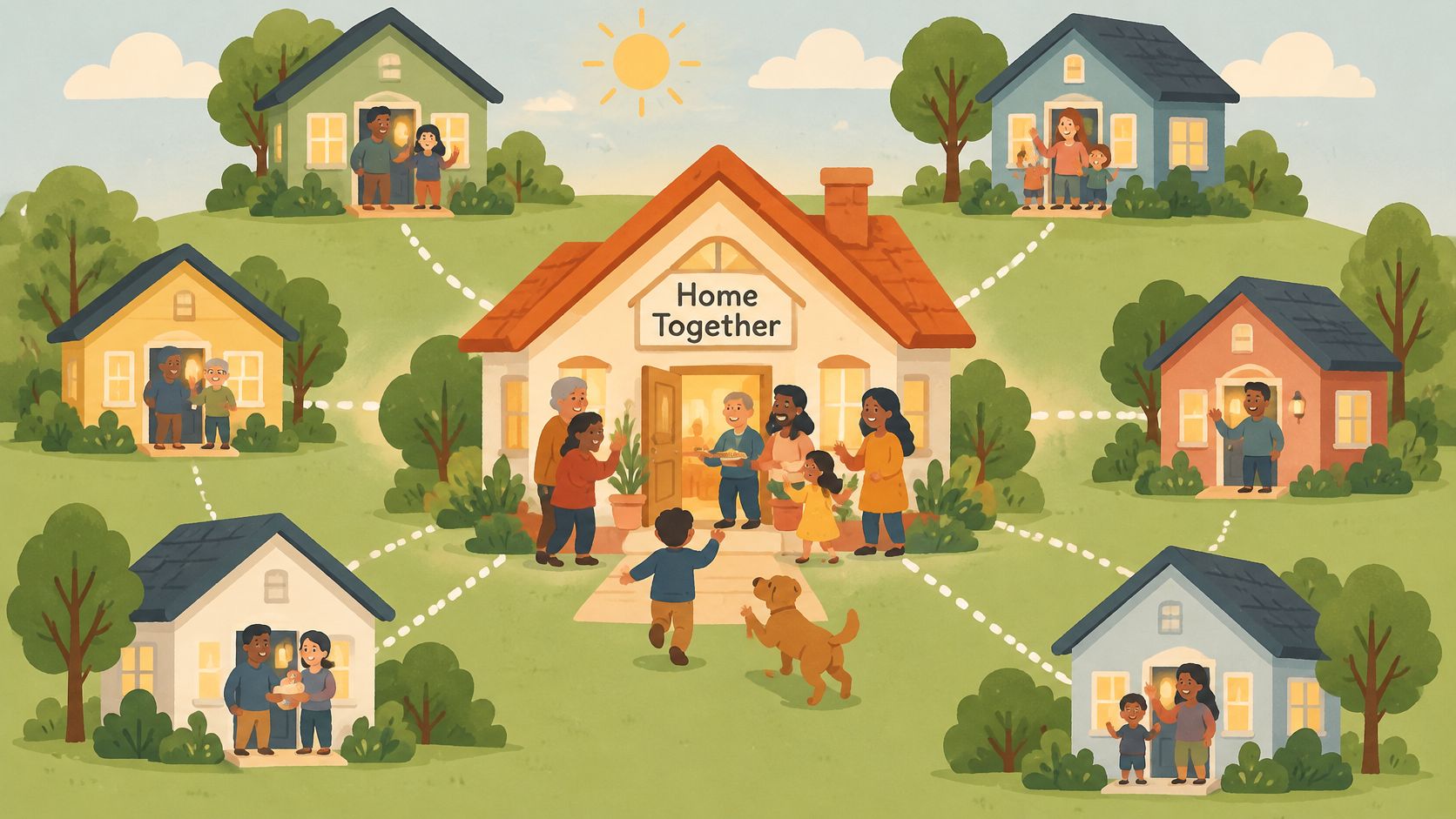
Mockingbird offers a network of fostering households rather than an occasional discussion group. Developed by the Mockingbird Society in the United States and adapted in the UK through The Fostering Network, the model brings families together around an experienced hub-home carer.
The network is called a constellation. Depending on local arrangements, families may share social activities, practical advice, training and planned breaks, with coordination and professional oversight.
What the arrangement needs to work
A typical use might involve a child gradually getting to know the hub household through agreed activities before any planned stay is considered. That familiarity can make support feel less separate from everyday family life, but it doesn't remove the need for approval, planning and attention to the child's wishes.
Practical rule: A trusted peer relationship doesn't automatically authorise childcare, overnight stays or changes to contact arrangements.
The trade-off is commitment. A closely connected network requires time, clear boundaries and willingness to participate; it may not suit a household seeking only occasional conversation.
Carers in Greater Manchester should ask whether a constellation is operating locally, which households can join, and what happens when the hub carer is unavailable. Carers considering a transfer should establish whether participation would actually be accessible, rather than assuming a model mentioned by a service is available everywhere.
Confidentiality agreements should explain what carers can share and what must reach professionals. Organic Fostering's foster carers' stories provide a separate route into exploring fostering experiences, but shouldn't be taken as confirmation that a local Mockingbird constellation is available.
3. Local Foster Carer Support Groups and Agency Forums
A local foster carer support group is often the most direct route to practical conversation about nearby schools, services and everyday fostering routines. Local authorities and independent fostering agencies may arrange meetings, training discussions, drop-ins or informal coffee mornings, although formats and access vary.
In Sinclair and colleagues' UK study published in 2004, 85% of surveyed foster carers had a locally available support group, but only about one-third attended regularly. That historical finding illustrates an important distinction: a group can exist without being easy for a household to use.

Finding what's actually running locally
A carer managing a difficult school journey might benefit from a discussion about preparation, predictable routines and communicating with school staff. The group shouldn't become a place to identify the child or criticise a named teacher.
The supervising social worker or agency coordinator is the best starting point for current arrangements. Organic Fostering's support information is also a starting point for questions about its wider support offer.
- Access and timing: Check whether meetings are agency-only, open across services, online or in person, and compatible with school and work commitments.
- Meeting arrangements: Establish whether children attend, whether any childcare is arranged, and who facilitates discussion.
- Privacy and follow-up: Ask how confidentiality concerns are handled and how recurring issues reach managers.
Agency forums can help turn shared problems into service improvements. Their limitation is that carers may feel cautious discussing dissatisfaction in a service-led setting, so a private route for raising concerns remains important.
4. Kinship Support for Family and Friends Carers
A grandparent caring for a child may need more than a general conversation about fostering routines. Family relationships, uncertainty about legal arrangements and the emotional impact of a relative's difficulties can all shape the support needed.
Kinship, the charity supporting family and friends carers, provides a specialist route into information, guidance and peer connection. Some kinship carers are approved foster carers; others care for children through different arrangements, including special guardianship or child arrangements orders.
Start with the arrangement, not the label
A relative considering caring for a child should ask the responsible service to explain the proposed arrangement clearly. Fostering approval, parental responsibility, financial support and ongoing professional involvement aren't interchangeable, and another family's experience may reflect a different legal position.
For example, an aunt comparing fostering with special guardianship needs advice about her own circumstances, not reassurance that a particular option worked for someone else. Specialist peer support can help her identify questions, but it can't determine legal entitlements.
- Availability: Check which Kinship groups or advice routes accept carers at the relevant stage and under the relevant arrangement.
- Confidentiality: Family members may be recognisable from small details, even when names are omitted.
- Professional support: Approved kinship foster carers should keep their supervising social worker involved; unclear legal questions may require independent legal advice.
Organic Fostering's explanation of long-term foster care can help distinguish an ongoing fostering placement from other ways a child may be cared for. It isn't a substitute for advice about a particular family's legal position.
The strength of specialist kinship support is shared understanding. Its limit is that shared family circumstances don't mean shared rights, allowances or support arrangements.
5. Organic Fostering Carer Connections, Supervision and Ongoing Support
Peer contact works best when the professional support around it is clear. Organic Fostering's support arrangements include an allocated supervising social worker, out-of-hours advice and ongoing learning, alongside opportunities for carers to connect.
The distinction between these routes matters during a difficult evening. Another carer might suggest a helpful settling-in routine; a supervising social worker can address placement-specific concerns, coordinate professional involvement and help decide what needs further action.
The 2024 State of the Nations summary report found that 69% of foster carers rated support from other foster carers as excellent or good, compared with 35% for out-of-hours support. Valued peer relationships shouldn't conceal gaps in formal help.
Questions for joining or transferring
Organic Fostering's explanation of foster care social workers offers a starting point for understanding professional roles. Current group formats, meeting locations and access arrangements should be confirmed directly rather than assumed.
A prospective carer might ask how introductions to other carers happen after approval. An experienced carer considering transfer might ask how existing support needs would be discussed and how continuity for the child would be protected.
Peer support can make a difficult experience less isolating. It can't replace an out-of-hours response, safeguarding action or individual placement planning.
Useful questions include who organises carer connections, how new households become involved, and whether meetings combine learning with discussion. Carers should also ask what happens after a concern is raised: who takes responsibility, how progress is communicated and where unresolved issues go.
If burnout, an allegation or a placement ending is involved, a social gathering alone may be insufficient. Supervision should identify whether specialist or reflective support is needed.
6. Faith, Cultural and Language Community Networks
A child's sense of belonging may involve a familiar language, food, faith practice, hairstyle, celebration or relationship with a community. Cultural and faith networks can help carers understand and support those everyday aspects of identity without expecting a child to explain everything alone.
Community centres, language groups and places of worship may also offer carers companionship and practical knowledge. These aren't necessarily fostering support groups, so their role and boundaries need particular care.
Support identity without making assumptions
Consider a carer looking for an activity where a child can hear a familiar home language. The useful starting point is the child's wishes and care plan, followed by discussion with the supervising social worker about a suitable organisation and safe participation.
A shared ethnicity or faith doesn't guarantee that a group will feel comfortable. Children may have mixed identities, different levels of religious involvement or reasons for preferring a quieter introduction.
Organic Fostering's explanation of how placement matches work provides context for considering culture, faith, language and relationships as part of a child's individual needs.
- Availability: Check the actual activity, age suitability, accessibility and whether the child wants to attend.
- Confidentiality: Organisers don't automatically need to know that a child is fostered or why they entered care.
- Professional boundaries: Transport, photographs, volunteering and childcare arrangements should be discussed through the appropriate fostering channels.
Community members may offer valuable understanding without having fostering training. Their advice shouldn't override a care plan, contact arrangements or safeguarding guidance.
The best fit is a network where the child can participate with dignity and choice. Cultural connection should support belonging, not turn the child into a representative of a whole community.
7. Moderated Online Foster Carer Communities
Online groups can fit around school runs, work and evenings when leaving home isn't practical. They also make it possible to find carers discussing a particular topic, such as supporting teenagers, preparing for a placement or managing household routines.
Moderation is a useful safeguard, not a guarantee of privacy or accurate advice. A closed Facebook group or private forum can still contain screenshots, outdated information and members whose circumstances differ considerably.

Check the group before posting
A carer seeking ideas for calmer mornings could ask about visual routines or preparing school bags in advance. Posting a photograph of a child's timetable, naming the school or describing a distinctive family situation would introduce unnecessary privacy risks.
Before joining, carers should look for named moderators, clear membership checks, rules against identifying children and a process for removing harmful content. Groups connected with recognised fostering organisations are a sensible starting point, but their rules still need reading.
- Availability: A group may accept only approved carers, members of an organisation or households from a particular service.
- Confidentiality: Names, photographs, documents, locations and recognisable family details should stay out of posts.
- Alongside supervision: Advice affecting safety, health, contact, behaviour plans or placement arrangements needs professional checking.
Online boundary: A quick reply from another carer isn't an emergency response.
Online discussion can become exhausting when distressing experiences dominate the feed. Muting notifications, leaving an unhelpful group or taking a break is reasonable, especially when conversation increases anxiety rather than helping with a practical next step.
For immediate danger, emergency services are the appropriate route. Urgent placement or safeguarding concerns should follow the fostering service's agreed procedure, not wait for comments.
How the foster carer support options compare at a glance
| Item | Type | Format | Best for |
|---|---|---|---|
| The Fostering Network: Membership, Advice and Local Foster Carer Groups | National fostering charity | Membership, guidance, campaigns and local groups | Independent information, advice and peer connections |
| Mockingbird Family Model: Hub Carers and Constellation Peer Support | Foster care support model | Hub home, family constellation, shared activities and possible respite | Carers seeking close-knit, ongoing peer support |
| Local Foster Carer Support Groups and Agency Forums | Local agency or authority support | Meetings, drop-ins, training and informal events | Local peer contact and practical community information |
| Kinship: Support for Family and Friends Carers | Kinship care charity | Guidance, resources and service signposting | Relatives and friends caring for a child |
| Organic Fostering: Carer Connections, Supervision and Ongoing Support | Independent fostering agency | Social worker supervision, out-of-hours advice, training and carer connections | Carers seeking professional support and local peer connections in Manchester and the North West |
| Faith, Cultural and Language Community Networks | Community-based support networks | Faith, language and cultural activities and connections | Culturally relevant support and helping children maintain identity |
| Moderated Online Foster Carer Communities | Online peer support | Moderated forums and social media groups | Flexible peer contact and discussion between in-person meetings |
Building Your Support Network Step by Step
The most useful support network doesn't have to involve every available group. A manageable combination might include a local peer connection, reliable professional advice and a specialist source of information when a particular issue arises.
For a carer in Manchester or elsewhere in the North West, the first step is a focused conversation with the supervising social worker or fostering agency. Asking what is running, who can attend and how introductions happen is more useful than relying on an old event listing.
Start small and check the fit
- Choose a manageable first contact: A coffee morning, introductory conversation or moderated forum can feel less demanding than committing to a programme.
- Name the actual need: Friendship, help with school routines, support after an allegation and advice about allowances require different responses.
- Keep a brief private note: Record whether the support was accessible, respectful and useful, without including identifying information about children.
- Review gaps in supervision: A group that feels welcoming may still leave practical needs, training questions or wellbeing concerns unresolved.
If no suitable group exists, the agency can be asked whether it can introduce interested carers, offer an online discussion or help establish a facilitated meeting. Any new group needs a named organiser, clear confidentiality boundaries and an agreed route for safeguarding concerns before sensitive discussions begin.
A distinction should also be made between social support and structured reflective support. Coffee and conversation can reduce isolation, but persistent exhaustion, trauma-related stress or difficulty repairing a relationship with a child may require more focused professional help.
Prospective carers can ask about peer support during enquiry and assessment, including whether introductory opportunities are available before approval. Experienced carers considering a transfer should ask about actual access, not just whether a service describes itself as supportive.
A good network allows carers to ask for help early while protecting children's privacy and dignity. Peer groups complement supervision, training, agreed respite and professional advice; they don't replace them, and carers shouldn't have to wait for the next meeting when a concern needs attention.
Organic Fostering supports fostering households across Manchester and the North West through professional guidance, ongoing learning and opportunities to connect with other carers. Prospective carers and those considering a transfer can visit Organic Fostering to request an informal, no-obligation conversation about becoming a foster carer, transferring agencies and the support currently available.