

What if the foster parent process isn't mainly a waiting period, but a series of checkpoints where preparation at one stage prevents delay at the next? That's the clearest way to understand approval in England. Each checkpoint asks a different question, involves different people, and needs action from the applicant before the process can move forward.
Table of Contents
- How the Foster Parent Process Works From Enquiry to Approval
- Who Can Apply and What Foster Carers Need
- Paperwork, Checks and Where Delays Start
- Preparing Your Home, Allowances and Tax
- How Stage 2 Assessment and Panel Approval Work
- What Happens After Approval and Placement
- Start With an Open Conversation About Fostering
How the Foster Parent Process Works From Enquiry to Approval
Where does the foster parent process begin, and what can you do at each point to keep it moving? With Organic Fostering, the route runs through five steps: start a conversation, an initial or home visit, apply and train, assessment, and panel approval. Inside the fourth step sit the two formal stages you will hear called Stage 1 and Stage 2: checks first, then the fuller assessment.
Approval takes time, and it is not guaranteed. A household may pause, withdraw, need more information, or find that fostering does not fit its circumstances right now. What helps is treating each step as a checkpoint with a question attached: what has to be ready before the next one opens?
The five checkpoints
| Step | What happens | Who is involved | What you can prepare |
|---|---|---|---|
| Start a conversation | An open talk about your household, your motivation and the questions you still have | You and the agency | Household details, rough availability, your reasons for applying |
| Initial or home visit | A visit arranged when the location and initial requirements look suitable | You and the agency | The spare room, who lives at home, your daily routine |
| Apply and train | Application, recruitment checks and preparation training | You and the agency | Identity and address history, referees, time for training |
| Assessment | Stage 1 checks, then the Stage 2 assessment: interviews, home-based evidence, references and a report | You and the assessing social worker | Documents, referee availability, honesty about the harder parts of your history |
| Panel and approval | A fostering panel makes a recommendation, and the agency decision maker makes the final decision | Fostering panel and agency decision maker | Knowing which report items are still open |
Applicants often misread the timing. The measured period usually runs from the start of Stage 1 to approval, so weeks spent deciding, completing training or chasing a returned check sit outside it. That is why two households applying in the same month can reach panel months apart.
Find the next checkpoint rather than staring at the final decision. The preparation you control is what moves you toward it.
At enquiry stage, gather household details and ask the questions you have. Entering Stage 1, have documents and referees lined up. Nearing panel, ask which items in your report are still unfinished.
Who Can Apply and What Foster Carers Need
Who can put themselves forward? Single people can foster, and households with children already at home can apply too. The assessment looks at the whole household, not marital status. It weighs availability and whether a child could be cared for safely there. Approval is not automatic, and it takes time.
Their views, ages and needs, and the possible effect of fostering on family life, form part of the assessment. A toddler's routines, a teenager's privacy, and school runs all matter when an agency considers what a household can offer. The week works like a timetable with little slack. Write those routines down before the next checkpoint, so the first visit starts from a real week.
How different households are considered
For a single applicant, the assessment explores household arrangements, availability, support, and reasons for fostering. You can prepare that checkpoint yourself. Note who is home on weekdays, who can help in a crisis, and which hours are already taken.
A couple's assessment also looks at household make-up and how caring responsibilities would be shared. Before the first assessment visit, write down who covers mornings, evenings, school holidays and overnight care, and what changes if one partner is away for work.
Interest in siblings or teenagers is a question of fit. Organic Fostering matches a child's care plan and known needs against a carer's approval, household, experience and ability to provide safe care. Space, routine and the ability to keep siblings together safely can all be relevant. Record how many children the home could take at once, and which parts of the day are already full.
For an approved carer considering a transfer, continuity is the checkpoint. Organic Fostering can explain the transfer process and discuss continuity for the children already in the carer's care. Bring the current approval and the situation of those children into that talk, so any move is planned around arrangements that are already stable.
The guide to who can foster and five common questions sets common household situations side by side. Bring one specific question from it to the first conversation.
Paperwork, Checks and Where Delays Start
Many applicants expect delay to begin at panel. In practice, it often begins much earlier, with a missing address date, a GP form that hasn't been requested, or a referee who didn't know contact was coming. Stage 1 establishes eligibility, and gathering information runs alongside preparation.
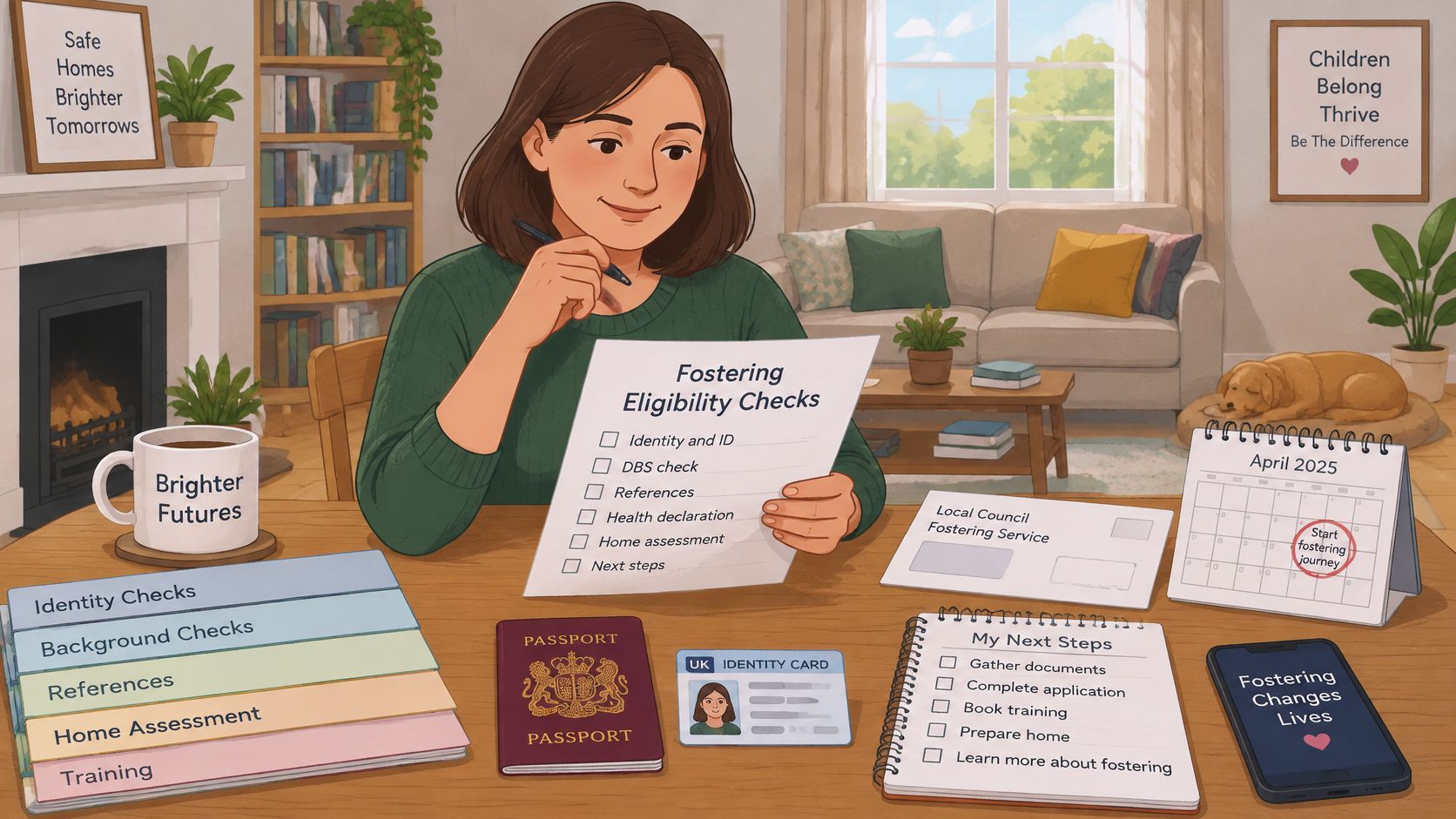
Recruitment and assessment can include identity, date of birth, address history, references, and criminal-record and barred-list information. Preparing the following items in order gives the assessing social worker fewer gaps to chase.
What to prepare first
- Identity documents and date of birth: Keep documents together and check that names and dates match across records.
- Address history: List every address lived at in recent years, with dates, in one document before the first assessment visit.
- Disclosure and Barring Service checks: These cover criminal record and barred list information for adults living in the household. Readers with a past record can read about fostering with a criminal record before deciding whether to ask for an individual discussion.
- Medical information: Tell the GP early that a report will be needed. Reports are reviewed by an agency medical adviser, so incomplete forms can create another round of questions.
- Written references: Ask referees before naming them, confirm their contact details, and warn them that the agency will be in touch.
- Household details: Record who lives in the home, including any children, and note expected changes such as an adult child moving in or out.
Late or incomplete DBS and medical information can hold checks up. Keeping copies of requests and sent forms makes it easier to show what has been chased and when.
Delay points and practical fixes
| Delay | Why it happens | What to do |
|---|---|---|
| Late DBS or medical information | Checks and GP reports take longer than expected to return | Chase early and keep copies of every request |
| Gaps or overseas history in addresses | Earlier addresses need verifying with dates | Gather addresses and dates before the first assessment visit |
| Slow references | Referees are hard to reach or reply late | Name two or three referees early and tell them to expect contact |
| Household changes | Assessment information must be updated | Tell your assessing social worker straight away |
| Panel deferral | The panel needs a complete and checked report | Ask for the planned panel date and what must be finished before it |
| Unrealistic placement expectations | Placement types may not match the household or approval terms | Discuss flexibility, boundaries and placement types before approval |
A delay isn't a refusal. It usually means a check, reference, household question, or report item is still open. The useful response is to ask which item is outstanding, who owns it, and what date it should be resolved by.
Practical rule: Ask for a written timetable at the start, with the next milestone date and the name of the person responsible for it.
If a panel recommendation is negative, the agency decision maker still makes the final decision. An applicant should ask the agency to set out its reasons in writing and explain the route for challenge. Written reasons make it possible to understand whether the concern was evidence, suitability, timing, or the type of approval requested.
Preparing Your Home, Allowances and Tax
A fostering home doesn't need a showroom finish. Agencies look for safety, routine, and space for a child's belongings, alongside adults who can keep boundaries calmly and consistently. Practical preparation before assessment visits helps the social worker see how everyday life would work.
A practical home checklist
- Bedroom: Provide a suitable bedroom that meets the agency's expectations, with room for sleep, clothes, and personal belongings.
- Safe storage: Keep medicines and cleaning products stored safely and out of easy reach.
- Windows and stairs: Check that windows and stairs are secure for the age of child being considered.
- Smoke alarms: Fit working smoke alarms and test them regularly.
- School and transport: Plan how school travel, appointments, and family time would fit around work and existing children.
- Support network: Identify friends or family who could offer practical help, listening support, or emergency backup.
Say a household in Greater Manchester has a spare room used for storage. Clearing it matters, but so does explaining the school run, work pattern, and who helps during illness. The assessment connects the physical space to the care around it.
Keep the money separate
| Payment | What it covers | Where to check |
|---|---|---|
| Child's allowance | Day-to-day costs of the child's care | Allowance guidance page on organicfostering.co.uk |
| Carer fee | Payment for the foster carer role, where the agency applies one | Organic Fostering payment information |
| Tax treatment | Whether fostering income is taxable and how qualifying care relief applies | GOV.UK guidance and current HMRC rules |
Fostering income isn't automatically tax-free. The GOV.UK guidance on help with the cost of fostering states that foster carers should register as self-employed and file tax returns, and that qualifying care relief can provide an exemption alongside tax relief for each week a child is fostered, subject to current HMRC rules.
Allowance, any fee, and tax treatment are separate questions. Readers should use the maintained tax allowances guidance for foster carers and current agency payment information rather than relying on a figure copied into an article without its financial year.
How Stage 2 Assessment and Panel Approval Work
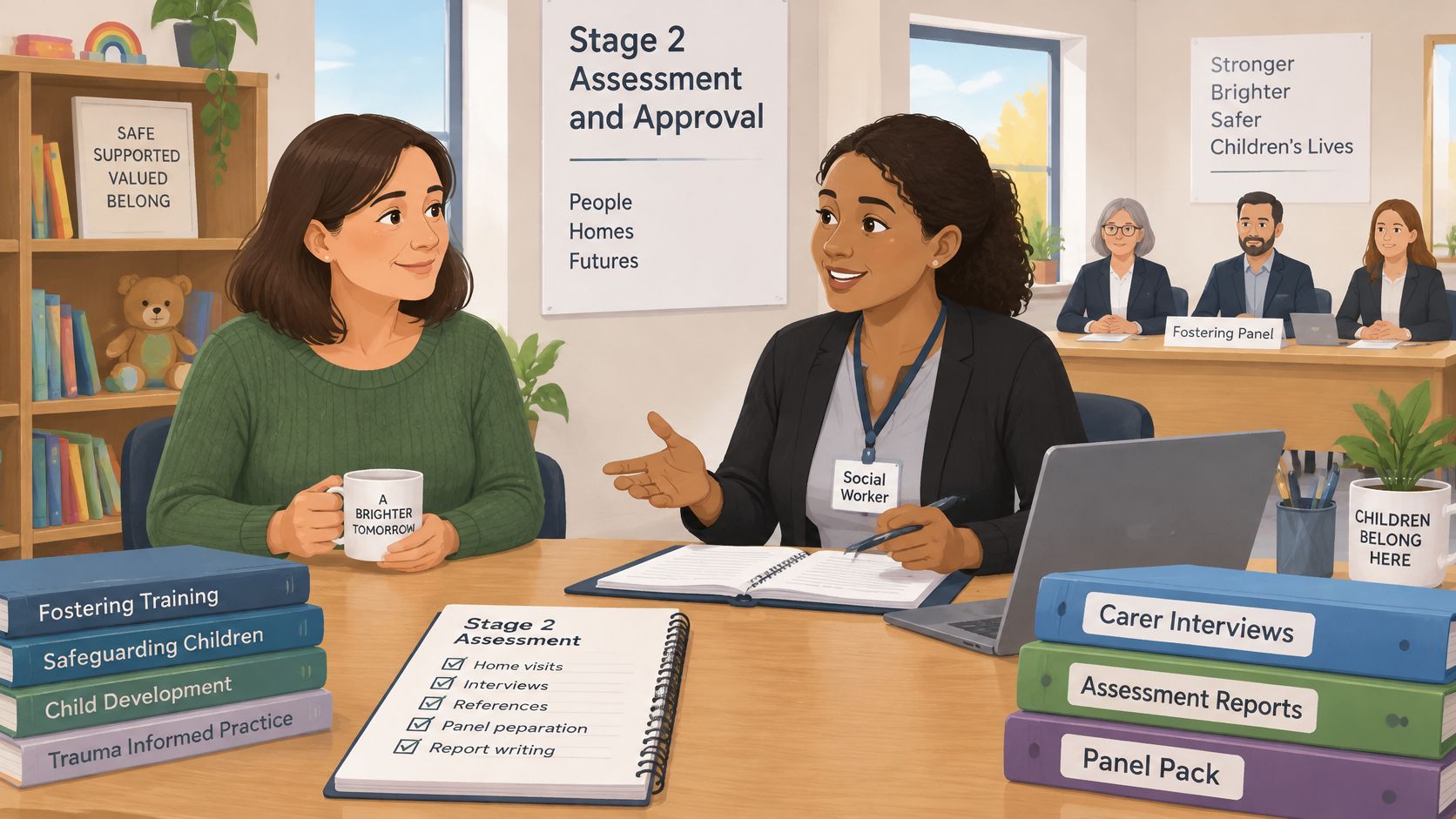
Stage 2 is the fuller competency assessment. Stage 1 checks eligibility, while Stage 2 gathers evidence about whether an applicant can provide safe, stable, and nurturing care. It goes beyond forms and asks how the household responds to stress, change, behaviour, and children's differing needs.
The Stage 2 steps
- Complete preparation training: Training covers the practical and emotional demands of caring for a child who can't live with their birth family. Attendance alone isn't the point. The applicant should use it to test assumptions and ask uncomfortable questions early.
- Attend interviews and home-based visits: A social worker asks detailed questions about life from childhood to the present, relationships, parenting experience, and household routines. Questions can feel personal because the report must explain strengths, vulnerabilities, and support needs with evidence.
- Provide evidence: References, outstanding checks, and examples from training or relevant experience help support the assessment. Vague claims carry little weight. A specific example of supporting a child through a difficult morning tells the assessor more than a general statement about patience.
- Review the assessment report: The assessing social worker writes the report for panel. The applicant should check factual accuracy and ask how any concerns have been recorded.
- Attend fostering panel: The panel reviews the report and makes a recommendation. Panel members may ask about gaps, placement types, household capacity, or support.
- Receive the agency decision: The agency decision maker makes the final decision and sets the terms of approval, including the types of placement the household may provide.
The two stages may run one after the other or at the same time. The GOV.UK publication on recruitment and retention in mainstream fostering records that 76% of mainstream households approved in 2022-23 experienced concurrent stages.
That overlap explains a common confusion. An applicant may be attending Stage 2 interviews while a Stage 1 medical or DBS item is still outstanding. Progress in one area doesn't mean every checkpoint has closed.
A panel recommendation is advice to the decision maker. It isn't the approval itself.
Understanding what happens at fostering panel helps an applicant direct timing questions correctly. The panel date, recommendation, and decision maker date are separate milestones.
Unresolved household circumstances and unrealistic expectations about placement type or support can slow the process, even for an otherwise suitable applicant. The control available is a documented assessment plan with milestones for checks, training, interviews, report completion, panel, and decision dates. Each milestone should have a named owner.
What Happens After Approval and Placement
The terms of approval set by the agency decision maker define which placements a household may offer, and those terms shape how quickly referrals arrive.
Consider a carer approved for respite only. When a sibling group needs a long-term home, that household is not considered until the terms of approval change through discussion and review. A carer approved for short-term and emergency care hears about placements sooner, because short-term fostering provides a safe home while the next steps for a child are planned.
How identity affects matching
Matching weighs a child's identity, language, culture, faith, relationships and individual needs against a carer's approval, household, experience and ability to provide safe care. Keeping siblings together or supporting a child's language can narrow the options open to a particular household. Those limits protect the child's needs.
The control point sits in preparation. Be clear about placement types, boundaries, availability, support network and household changes, and ask before approval how identity, location and household composition might affect waiting time. The guidance on how placement matches work explains that comparison.
Approval stays live after the panel. A formal review happens at least once a year, alongside supervision, and it is the natural place to widen terms when circumstances change. Payments apply to active placements, which is why carers should raise timing questions early rather than assume a steady flow of referrals.
Start With an Open Conversation About Fostering
What would you ask before letting a stranger assess your home? Most applicants arrive with a mix of motivation and worry. An open conversation about the household, the reasons for considering fostering, and the questions still unanswered gives both sides enough to judge whether the next checkpoint makes sense. Approval is not automatic, and how long it takes depends on what the assessment finds.
An area is published only after recruitment there is confirmed, along with the assessment, supervision, and continuing support that follow. Where location and initial requirements look suitable, an initial visit may be arranged.
What to have ready
The practical requirements, a spare room among them, came up earlier. For this conversation, bring what only you can answer:
- Questions: anything about checks, training, placement types, allowances, or timescales that remains unclear.
- Placement preferences: the types of care you can picture offering, and the boundaries around them.
- Support network: who around you would realistically help on a hard week.
Households transferring from another agency should mention their current approval and any children in their care; Organic Fostering explains the transfer process and discusses continuity for those children.
One clear step this week for readers in Greater Manchester and the North West: the enquiry page if you are new to fostering, the transfer route if you are experienced, and the questions above in hand. Prospective and approved carers are supported through enquiry, assessment, training, supervision, and placement matching. Visit Organic Fostering to start an open conversation about your circumstances and next step.