

If you are asking, “should I become a foster parent?”, look beyond a spare room and goodwill. A dedicated bedroom, time for difficult weeks and willingness to work with professionals are practical commitments to weigh. Wanting a baby, company or extra income is not enough to sustain the role.
A child needs dependable adults when plans change, relationships become complicated and progress does not come with gratitude. The household must also be ready to support the child's identity and relationships, not just offer a bed.
Ask whether your household can sustain the care a child needs, including when fostering puts pressure on everyday family life.
Table of Contents
- Should Fostering Suit Your Household
- Children Who Need Foster Homes in England
- The Six Types of Fostering Compared
- Time, a Spare Room and Money
- Hard Weeks That Test the Decision
- Checks, Training and the Assessment
- Talk It Through Before You Apply
Should Fostering Suit Your Household
Fostering can suit many different households, but it shouldn't be used to repair an unhappy one. This is children's foster care in England: providing safe family life for a child who cannot live with their birth family.
The strongest starting point is a household with room, practical availability and adults who understand that the child's needs will influence everyday decisions. An immaculate house, a particular relationship status or previous parenting experience cannot substitute for those commitments.
Single people can foster. Couples can foster, and people already raising children can foster too. What matters is how the household would function with a child living there, rather than whether it resembles an idealised family.
When fostering can fit a household
These are practical decision prompts, not promises of eligibility or approval.
| Household | Realistic when | Wait when |
|---|---|---|
| Living alone | There's a spare bedroom, a support network and time for appointments | There would be no backup for illness, family contact or school runs |
| Living as a couple | Both adults accept checks, training and shared decisions | One partner is unsure or unwilling to be assessed |
| Already raising children | The children can be heard and the effect on them looks manageable | Children at home are already under severe strain |
| Renting | The tenancy is secure and any required permission is realistic | A suitable spare room cannot be available throughout the stay |
| Working | Hours can flex around school, family contact and meetings | The child would need full-time care and work cannot flex |
| Older applicant | Health and energy match the child's day-to-day needs | Health would make safe daily care unreliable |
| Past health issue, debt or conviction | The circumstances can be assessed individually rather than assumed to rule fostering out | The issue affects current safety or would be concealed |
For someone living alone, the practical questions behind single-parent fostering deserve attention before an application. A support network needs to mean named people and realistic help, not a general belief that friends would probably step in.
There's no fixed upper age limit for foster carers. Health, energy and the ability to meet a child's needs are assessed. Similarly, a previous health issue, debt or criminal conviction doesn't automatically prevent fostering with Organic Fostering, but individual assessment is essential.
Practical rule: An issue that needs explaining should be discussed openly, not hidden in the hope that it won't matter.
The household needs a voice
Existing children aren't automatically expected to adjust. Their views, ages, needs and the possible effect of fostering on family life form part of the assessment. Adults should listen for worries about privacy, attention and changes to routines, rather than asking children only whether fostering sounds nice.
Before taking the next step, a household should settle these questions:
- Daily care: Who would provide it, including during working hours?
- Adult agreement: Would every adult at home accept safeguarding checks and an honest assessment?
- Emotional readiness: Could the household cope if a placement ended suddenly?
Starting a conversation isn't the same as being approved. The harder test is whether the household's answers remain realistic during the difficult situations that fostering can bring.
Children Who Need Foster Homes in England
A looked-after child is a child in the care of a local authority. England's need for foster homes extends across childhood, not just infancy.
The Department for Education's England statistics for 2024 record 83,630 children looked after on 31 March 2024, 33,050 children entering care during the year ending on that date, and 56,390 children living in foster placements, representing 67% of all looked-after children. The same publication gives the following age breakdown for children in foster placements in England in 2024.
Children in foster placements by age, 2024
| Age band | Children | Share |
|---|---|---|
| Under 1 | 3,040 | 5.4% |
| 1 to 4 | 8,260 | 14.6% |
| 5 to 9 | 12,760 | 22.6% |
| 10 to 15 | 22,830 | 40.5% |
| 16 and over | 9,510 | 16.9% |
The largest age band was children aged ten to fifteen, not babies. That distinction matters because a household imagining only nappies and nursery runs may not yet have considered secondary school, friendships, online life or preparation for independence.
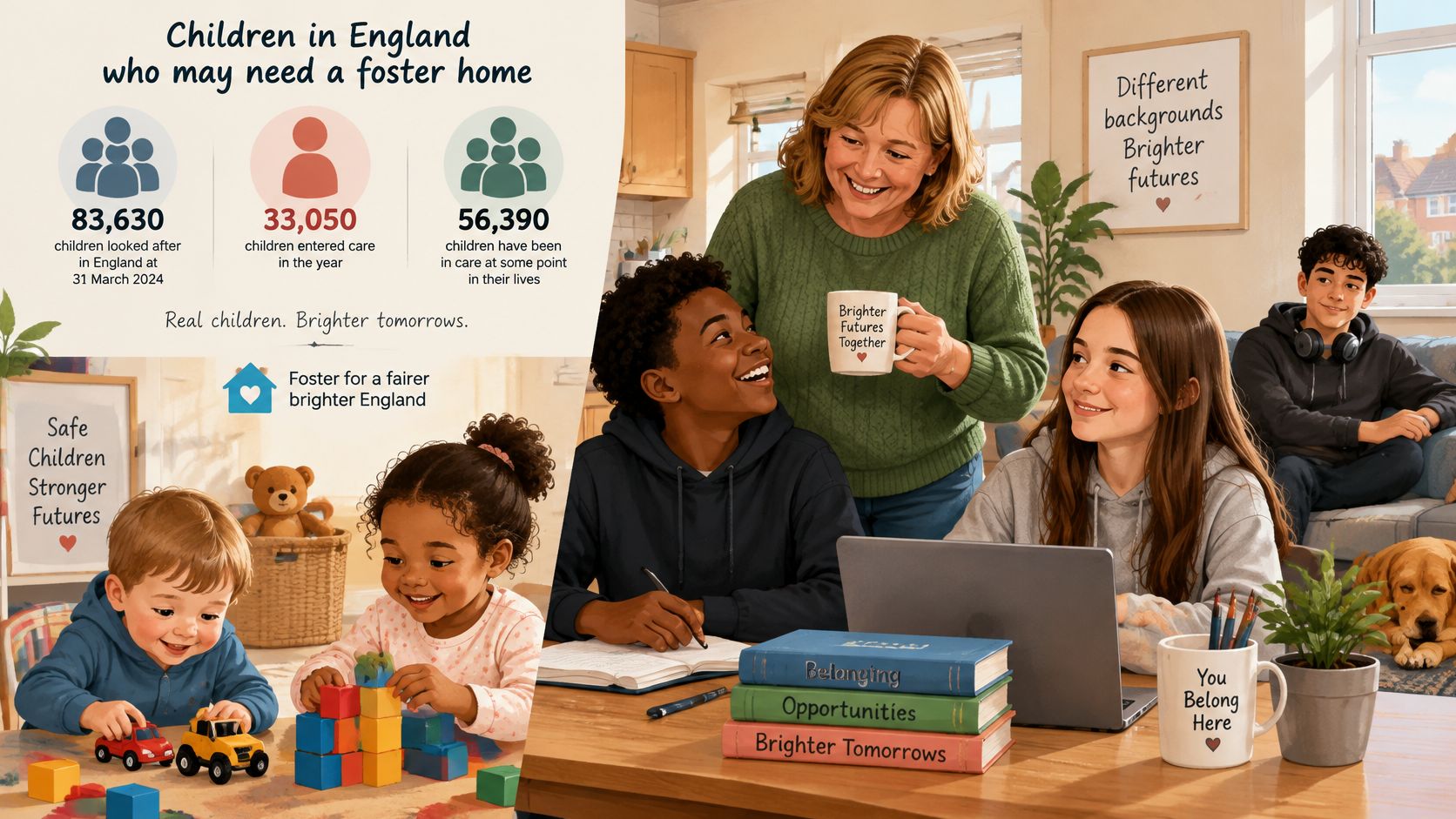
Think beyond an imagined age
An older child needs parenting, not just accommodation. That can mean helping with school attendance, making room for difficult feelings about family, supporting identity and teaching everyday skills without treating the child as younger than they are.
Equally, age alone doesn't describe a child's needs. Before considering a placement, prospective carers should think about the care they could sustain: practical help, emotional availability, supervision and support with relationships.
Brothers and sisters may also need a home together. Understanding siblings in foster care helps households consider whether their space and attention could support those relationships rather than treating each child's needs separately.
Fostering is not adoption. It doesn't make the foster carer the child's legal parent, and a placement can end or change. Contact with birth family may be part of the child's plan, so caring well includes making room for relationships beyond the foster home.
A child shouldn't have to replace their existing identity or family attachments to belong in a foster household.
The useful decision is therefore not which age seems easiest to imagine. It's which child's needs the household could realistically support, including school, family relationships and the gradual work of building trust.
The Six Types of Fostering Compared
A fostering arrangement should fit the household's real availability, not its most optimistic version of the future. Someone who can offer predictable planned breaks may have a different contribution to make from someone ready for an unexpected arrival.
Organic Fostering treats a good match as a shared professional decision, not the first available bed. Its matching process considers the child's care plan and known needs alongside the carer's approval, household, experience and ability to provide safe care.
Six fostering types and who they suit
| Type | What it asks of the household | Often suits |
|---|---|---|
| Short-term | A safe home while next steps are planned, without assuming a fixed end date | People who can live with uncertainty about length |
| Long-term | Continuity of care, school and routines while a lasting plan is in place | Households able to sustain a child's settled everyday life |
| Emergency | Readiness for a child to arrive with little notice | Homes with a ready spare room and flexible adults |
| Respite | Planned breaks for another fostering household | People with regular but limited availability |
| Siblings | Care that helps brothers and sisters stay together | Households with space and attention for more than one child |
| Teenagers | Support with adolescence, independence and identity | Adults comfortable balancing growing freedom with safe boundaries |
Siblings and teenagers describe who is placed, rather than a formal placement duration. Both can be relevant to short-term, long-term, emergency or respite arrangements. Approval for fostering shouldn't be understood as approval for every arrangement or every child.
Short-term fostering requires particular honesty about uncertainty. A household may be comfortable offering temporary care but still struggle if planning takes longer than expected. Long-term care brings a different question: whether the adults can maintain commitment through changes in school, employment and their own family circumstances.
A responsible match includes boundaries
Before agreeing to a referral, carers should seek a clear picture of the proposed stay and its practical demands. Saying yes without enough information isn't generous if the household cannot sustain the care.
The discussion should establish:
- Likely duration: What is known about the plan, and what remains uncertain?
- Daily commitments: What school travel, health appointments and family contact would be involved?
- Relationships: Can siblings, relatives and important community connections be supported?
- Household limits: What change in needs or circumstances would affect the ability to continue?
A good match also needs detail about faith, language, ethnicity, food, hair care and clothing. These aren't finishing touches after accommodation has been arranged. They shape whether a child can feel recognised and live comfortably in the home.
Carers don't need to pretend they already know everything. They do need to identify gaps, seek relevant information and be willing to learn. Being willing to foster is not the same as being suitable for every referral.
Time, a Spare Room and Money
A spare room and good intentions are only the starting point. Before deciding to foster, test whether your household can make time consistently, keep a room available and manage the money without relying on uninterrupted placements.
Time means more than being home overnight
School runs are only part of the commitment. Family contact, meetings, health appointments and sudden changes can all require an adult to be available.
Whether a foster carer can also work depends on the child's needs and the carer's availability. Your job title or contracted hours alone cannot answer the question. A flexible role may still leave periods when you cannot take a call or leave work.
Map out a normal working week, then add an appointment during the school day and a changed collection time. If the arrangement depends on someone else somehow covering the gap, your plan needs more work.
A bedroom must be available throughout the placement
Applicants will usually need a bedroom dedicated to a foster child. If the room is regularly used as an office, guest bedroom or storage space, consider how it will become and remain the child's space.
You do not have to own your home. You may be able to foster while renting, but you will normally need secure accommodation, a suitable spare bedroom and any permission required under your tenancy.
Could the child use the room reliably, with privacy and space for belongings throughout the placement? A room that is only available after a last-minute clear-out is not a dependable arrangement.
Keep allowance, fees and tax separate
The child's fostering allowance is intended to cover the cost of caring for the child. The GOV.UK guidance on help with fostering costs explains allowances and factors affecting payments, including a child's age and needs and the fostering provider.
Any carer fee is separate and depends on the provider's current payment policy. Do not treat a headline payment as money available for household bills until you understand which part is intended to support the child's care. This distinction matters when considering whether carers get paid to foster a child.
Tax treatment is separate again. The GOV.UK guidance on foster-carer tax arrangements explains that foster carers generally need to register as self-employed and complete tax returns, and that qualifying care relief can reduce taxable caring income. That does not make every payment tax-free.
Budgeting safeguard: Understand the fostering payment before relying on it.
Before changing your employment arrangements, ask for the current written allowance policy and worked examples. Check that they distinguish the child's allowance, any fee, additional payments and what happens financially between placements. A household budget that assumes placements will continue without a break is not a safe basis for deciding to foster.
Hard Weeks That Test the Decision
A household's readiness is easier to judge through difficult situations than through a description of an ideal day. The following examples are illustrative situations, not accounts of Organic Fostering families.
Illustrative situations that expose practical gaps
- An older child than expected: A household that pictured a young child is asked about a teenager. School difficulties, phone rules and staying out require calm boundaries, not just stricter instructions. The adults need to remain curious about what behaviour means.
- Siblings with competing needs: Brothers and sisters need a home together, but the available bedroom arrangement isn't suitable and family contact clashes with work. The desire to keep them together cannot substitute for adequate space and availability.
- An emergency on a weeknight: A referral arrives while an adult is working late and the spare room is full of belongings. Emergency fostering needs actual readiness, not an intention to prepare once a child is identified.
- Unfamiliar identity needs: A child's faith, language, food or clothing needs differ from those of the household. The adults need information and practical help, rather than an assumption that treating everyone identically will be enough.
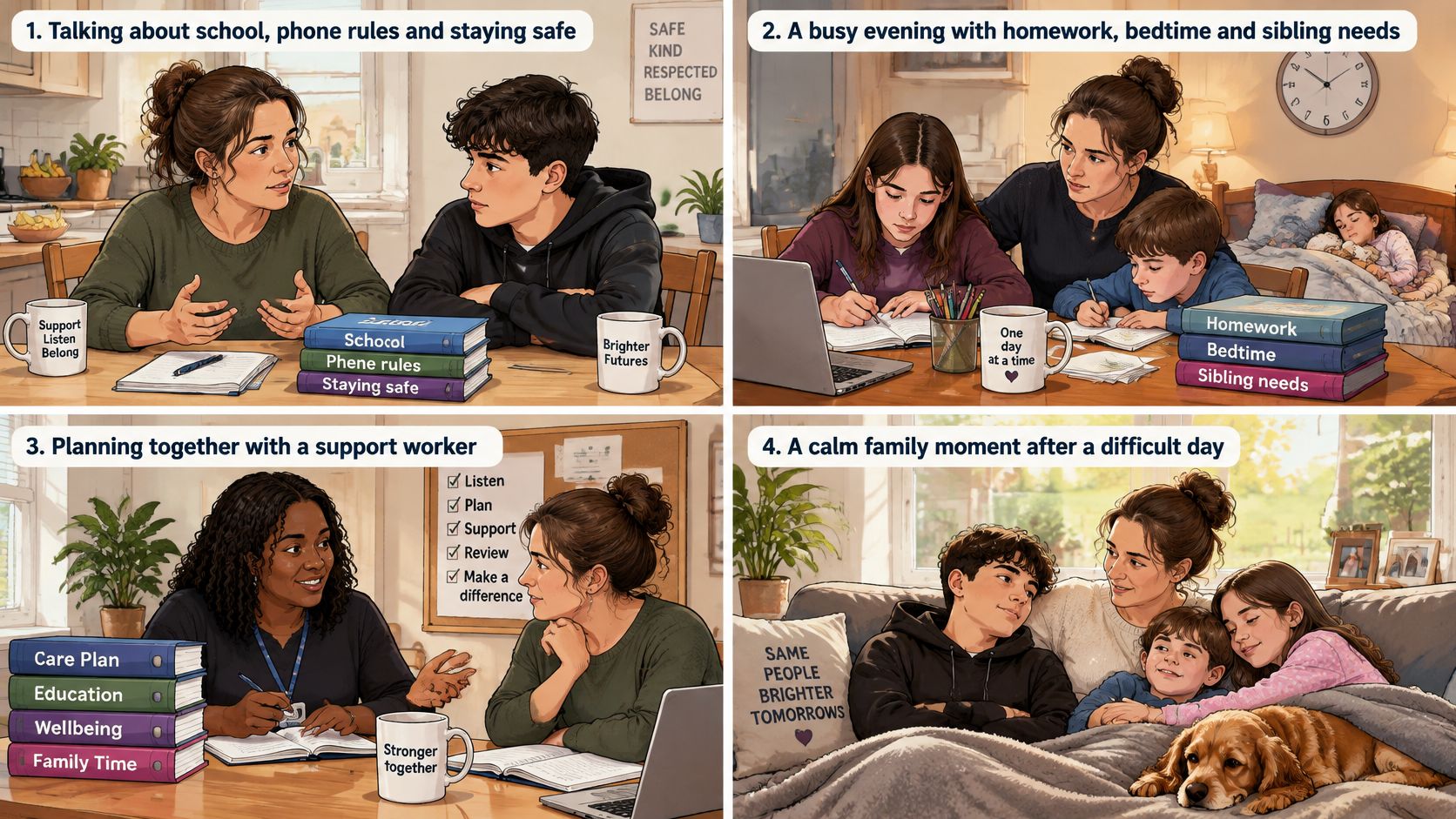
Support has to work when life isn't straightforward
The Centre for Evidence and Implementation's report on foster-carer retention and recruitment in England records a fall in approved foster carers from 63,890 in 2021 to 56,345 in March 2025, a 12% decline. That doesn't predict an individual household's experience, but it reinforces the need to take sustainability seriously.
The stress test should include disrupted family contact, an allegation, an unclear end date and the effect on other people at home. It should also include a placement ending suddenly, when adults may need support while still helping children in the household understand the change.
Organic Fostering helps carers look beyond a child's immediate behaviour and respond with safety, boundaries and empathy. Its support includes a supervising social worker, preparation and ongoing learning, advice outside normal hours for approved carers, contact with other carers, and help with education and health needs.
A foster-carer support group can offer connection, but peer contact shouldn't be mistaken for professional help with a safeguarding concern. Prospective carers should understand who handles urgent problems, how concerns are escalated and what financial information will be available during disruption.
Support matters most when it remains practical during the week that goes wrong.
Checks, Training and the Assessment
A spare room and good intentions do not settle whether fostering is right for a household. Fostering assessment is a safeguarding process. Honest answers about limitations matter more than polished ones. The process checks whether you can provide safe care and helps identify what preparation you need.
The route from conversation to decision
Organic Fostering's route has five steps:
Start a conversation. Discuss your household, motivation, availability and unanswered questions. Organic Fostering can explain its current requirements, and an initial conversation does not commit you to applying.
Initial or home visit. If your location and initial requirements appear suitable, Organic Fostering may arrange a visit. Use it to discuss the home and raise questions about the process.
Apply and train. Applicants complete an application and preparation for the role. Take the learning seriously: it should help you consider the responsibilities and the child's needs, not just complete paperwork.
Assessment. GOV.UK eligibility and assessment guidance explains that the assessment has two stages, which may run separately or together, and includes a social worker's assessment of your ability to care for a child. The GOV.UK application guidance says the applicant and every adult living in the household must complete an enhanced Disclosure and Barring Service check, including barred-list information. Checks can also cover identity, date of birth, address history and references.
Panel and approval. The assessment goes to panel, followed by an approval decision. Applying does not guarantee approval, and timescales vary.
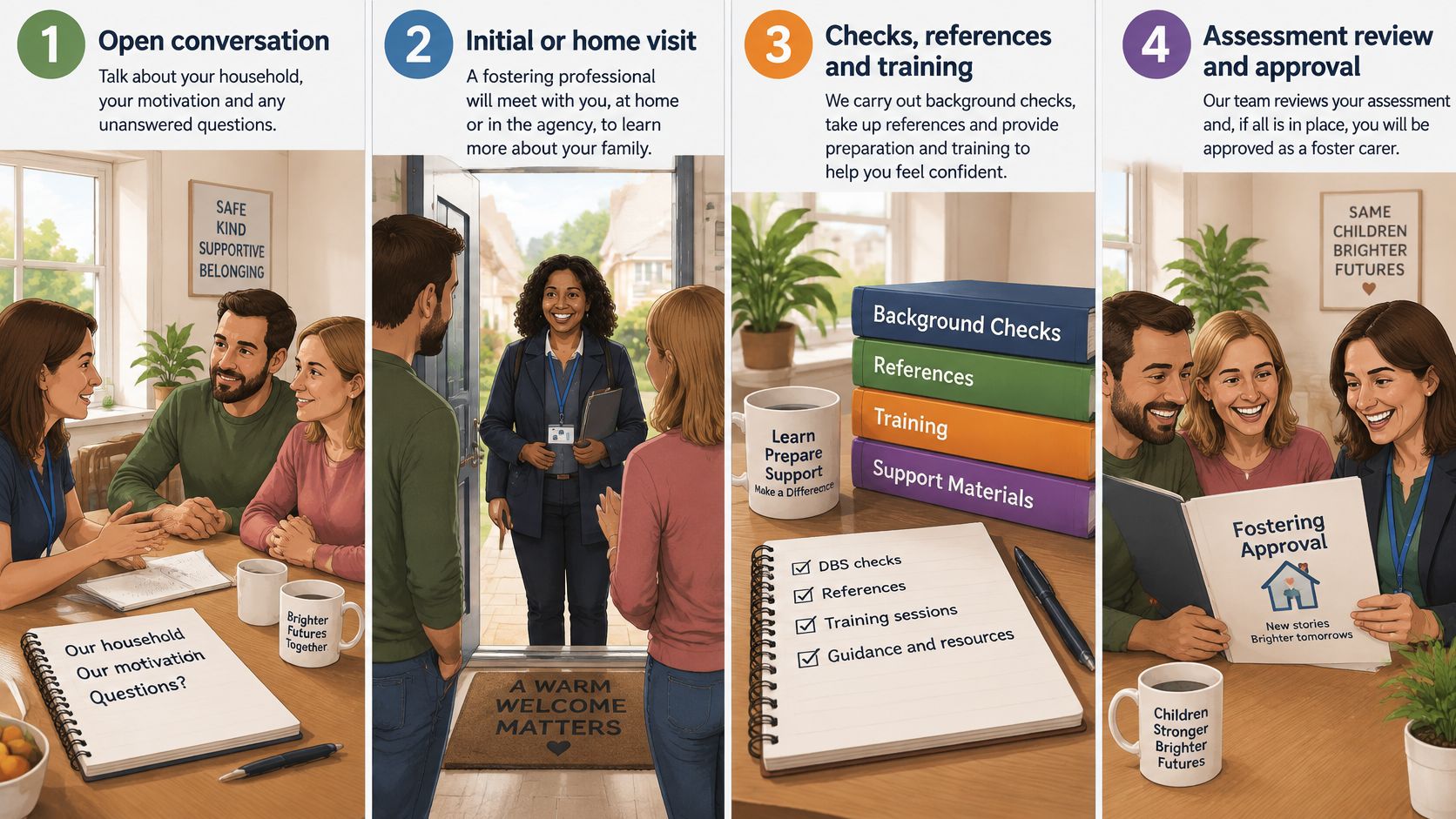
What readiness looks like beyond paperwork
Organic Fostering normally requires a suitable spare bedroom, time and flexibility, the right to work in the UK, and a willingness to complete assessment, checks and training.
Assessment looks at family life, confidentiality and boundaries, as well as your ability to work with schools, health professionals, social workers and a child's birth-family network. You may need to handle sensitive information and work with professionals who disagree. Be candid about what you find difficult; that gives the assessor a clearer basis for discussing preparation and support.
Before applying, consider how your household will protect a child's privacy and support their identity and relationships. Discuss what can be shared outside the home, and how you would respond if a child's needs or circumstances change. These questions are specific to fostering, not household logistics.
You can apply through a local council, regional recruitment hub or independent fostering agency. Choose a route that explains its assessment, expectations and continuing support clearly for your area and circumstances.
Talk It Through Before You Apply
The answer to whether fostering is right should lead to a practical decision, not pressure to apply immediately. Ready to enquire, not yet and considering a transfer are all legitimate positions.
Ready to enquire
A household is ready for an initial conversation when it can discuss both its strengths and its limits. It doesn't need every answer, but it should be willing to examine its motivation, practical availability and the kind of care it could sustain.
For someone in Greater Manchester or the wider North West, that conversation should include the actual town where the household lives. Organic Fostering publishes an area only after confirming recruitment and its ability to provide assessment, supervision and continuing support there. A regional description shouldn't replace checking the individual location.
Not yet
Waiting is responsible when there's a clear gap to fix. That might mean obtaining tenancy permission, making a bedroom available, changing work arrangements or giving children already at home time to discuss their concerns.
Where the intention is to care for a child already known to the family, understanding kinship care and foster care can help clarify which conversation is needed. The starting point shouldn't automatically be a general fostering application.
Considering a transfer
For an approved carer, the child's welfare and continuity come first. Organic Fostering can explain its transfer process and discuss continuity for children already in the carer's care.
The strongest next step is an open conversation about what needs to change and why. Neither enthusiasm nor dissatisfaction should replace careful planning around a child's existing home.
Organic Fostering recruits, assesses and supports foster carers to provide safe, nurturing family life for children and young people. Households considering fostering, or approved carers considering a transfer, can visit Organic Fostering to start a conversation about their circumstances, location and the questions that still need answering.