

If the total number of children in care in Lancashire has fallen over the past few years, why are local fostering teams still working so hard to recruit households? Most generic guides miss that question entirely. They list basic eligibility rules and weekly payments as though every spare bedroom fills the same gap.
In practice, fostering in Lancashire is shaped by who needs a home right now, not by headline totals alone. Older children, brothers and sisters who need to stay together, and young people living with complex emotional and behavioural needs account for the sharpest pressure on local placements. Understanding how your home, schedule, and support expectations line up with that local reality makes every later step clearer, whether you apply this year or decide to wait.
Table of Contents
- The Lancashire Fostering Picture at a Glance
- What Lancashire's Own Placement Data Shows
- Who Can Foster in Lancashire
- The Route to Approval Step by Step
- Placement Types and Which Household They Suit
- Support, Allowances and the Tax Position
- Choosing Between the Council and an Agency
- Your First Conversation About Fostering
The Lancashire Fostering Picture at a Glance
A couple in Chorley with an empty box room and a single person renting in Burnley will read the same fostering guidance very differently. Each has one or two questions that matter most to their household, and the rest is background. The table below works as a decision map: find the row that creates the biggest question mark for you, and start your research there rather than trying to absorb everything at once.
| Decision area | What to check first | The question worth asking |
|---|---|---|
| Who can apply | Whether you meet the baseline: a suitable spare bedroom, the right to work in the UK, time and flexibility | Does my housing situation count? Renting can work with secure accommodation and any permission your tenancy requires, and single people can foster |
| How long approval takes | How the two-stage assessment fits around your job and family commitments | What is a realistic month-by-month picture from first enquiry to panel? |
| Where carers are needed | Which children locally wait longest for the right home | Lancashire's own data points to older children, sibling groups and children with complex social and emotional behaviour, so does my household suit one of those priorities? |
| Placement types | Which of the options matches your spare rooms, routine and experience | Would short-term, long-term, emergency, respite, sibling or teenage placements fit the life I actually lead? |
| Support | What sits behind the carer once a child arrives | Can I test the supervision, training, out-of-hours advice and peer contact on offer before applying, rather than after approval? |
| Allowances and tax | How the weekly allowance and any fees are calculated and taxed | What would my household receive for the placement types I am considering, and how does qualifying care relief apply to my circumstances? Payments are never guaranteed income |
| How to start | Who covers your part of Lancashire | Does this agency or team recruit in my Lancashire location, and can it support me locally once approved? |
Treat the table as a filter, not a checklist to complete in order. Someone renting a two-bedroom flat in Preston usually checks housing and room rules first, because everything else depends on that answer. A couple whose children have left home often jumps straight to timescales, teenagers and tax treatment.
One habit separates confident applicants from frustrated ones: testing claims early. Any council or agency will describe strong support and careful matching, but you can ask to speak with existing carers, request written allowance policies and confirm local coverage before you invest months in assessment. Organic Fostering, an independent fostering agency based in Old Trafford, Manchester, publishes an area only after confirming it is recruiting foster carers there and can provide the assessment, supervision and continuing support that follows. That is the standard worth applying to whoever you contact first.
What Lancashire's Own Placement Data Shows
Is a lower number of children in care good news for foster recruitment? Only up to a point. The useful question for a prospective carer is sharper: which children still struggle to find the right home, and what kind of household is prepared to support them?
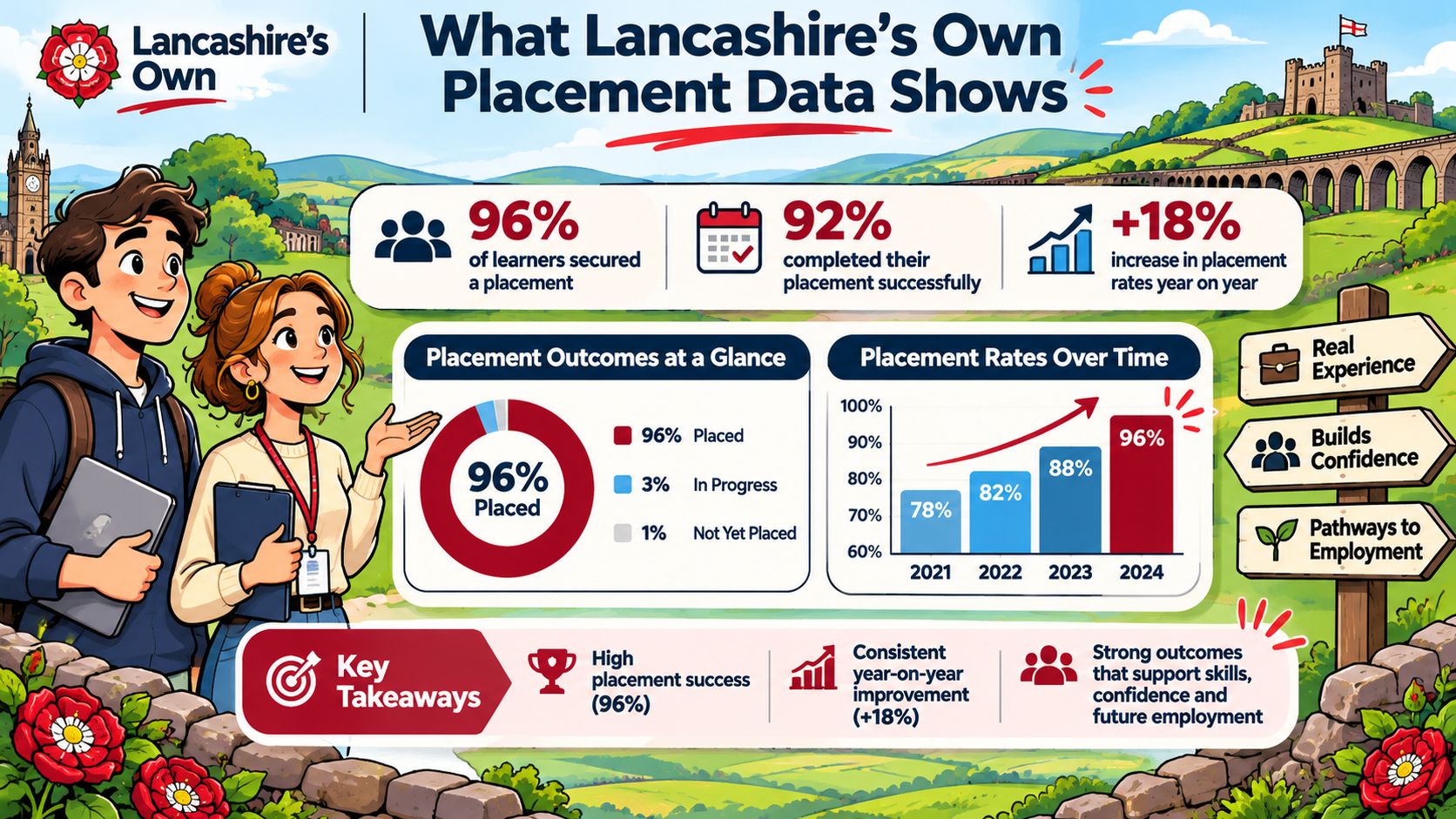
Lancashire's published figures show why headline totals can give a false sense of ease. In September 2020, 63% of Lancashire children looked after by the local authority lived in foster care, according to Lancashire County Council's placement sufficiency strategy. By March 2025, Lancashire County Council's 2025 sufficiency data recorded 1,124 children living in foster homes, and the share of looked-after children placed in foster care had climbed to 66.2%. The proportion rose even as the number in foster homes dropped from 1,349 in March 2021. The county's overall looked-after population also fell from 2,127 in March 2019 to 1,699 in March 2025, a reduction of 428 children, or about 20%.
That pattern matters because a smaller care population can still leave some placement types hard to fill. In a school timetable, for instance, fewer pupils overall does not mean every class has the right teacher, room and support. In the Lancashire Fostering Market Position Statement for April 2025, the council reported 268 fewer children in care (14% down) than in April 2021, while children placed in agency foster homes fell by 175 (37%). The same statement recorded that, between April 2024 and March 2025, sibling-group requests made up 14% of all agency placement requests, while the council highlighted older children, sibling groups, and children with complex social and emotional behaviours as priority areas.
Put plainly, a teenager or three brothers and sisters may still need a carefully matched home, even when overall numbers are lower.
Geography and What Local Demand Means for Your Spare Space
Lancashire's placement map works in two directions. In September 2019, Lancashire County Council's placement sufficiency figures recorded 1,330 looked-after children living in non-connected foster placements inside Lancashire, compared with 1,065 Lancashire children in non-connected foster homes overall. That means the county both hosts children placed by nearby authorities and commissions placements elsewhere. For carers, that can affect school continuity, travel distances and how local matching decisions are made.
For someone weighing up fostering in Lancashire today, those numbers translate into practical household choices:
- One spare bedroom: Ask specifically about fostering teenagers or offering planned breaks, rather than assuming local services only need homes for babies and toddlers.
- Two or more spare bedrooms: Explore caring for sibling groups, where keeping brothers and sisters together remains one of the hardest matches to make locally.
- Patience with complex needs: Ask how an agency prepares and backs carers supporting young people whose past trauma shows up in challenging behaviour at home or school.
A due-diligence mindset helps here. Before applying, ask which placement types the service is currently recruiting for, how it prepares carers for older children or sibling groups, and what supervision looks like once a child is placed. Those answers give you a clearer test of fit than the headline care count alone.
Who Can Foster in Lancashire
Eligibility rules in England are more practical than many people expect. They come down to one question: can your household offer a child safe, steady care week after week? The core requirements reflect that. Applicants normally need a suitable spare bedroom, the right to work in the UK, time and flexibility around a child's needs, and willingness to complete the full assessment, background checks, and preparation training.
Each requirement connects to what daily life with a child involves. A spare room gives a child privacy and a space of their own. Time and flexibility cover the reality of school runs, health appointments, meetings with social workers, and contact time with birth relatives, which rarely fit inside a rigid nine-to-five schedule.
Housing, Household Structure and Prior Experience
Renters often assume you have to own your home before you can foster, and rule themselves out on that basis. The assumption is wrong. You may be able to foster if you rent, provided you normally have secure accommodation, a suitable spare bedroom, and any permission required under your tenancy agreement. Whether a home is mortgaged, leased, a flat, or a terraced house with stairs, an assessor asks the same grounded question: is the space safe, private, and settled for a child?
Family structure is equally broad. Single people can foster, as can married or unmarried couples, people with grown-up children, and households with no children of their own. You don't need prior parenting experience to foster teenagers or school-age children, because preparation training and ongoing supervision build practical skills around boundaries, communication, and trauma-informed care.
Approval is only ever decided at the end of the statutory assessment, which exists to test suitability for the specific children a service might place. An enquiry conversation is exploratory, and reading through five key questions about who can foster helps clarify how lifestyle, health, and household circumstances are weighed before you apply.
What to Check Before You Apply
Meeting the criteria is only half the decision. The other half is choosing a service that can support your household, and that is worth testing before you commit to an application rather than after approval. Three questions do most of the work:
- Recruitment area. Does the service actively recruit where you live, and can it supervise you properly from its base? Organic Fostering publishes an area only after confirming it is recruiting foster carers there and can provide the assessment, supervision and continuing support that follows, and its team can tell you which areas it currently covers. Living outside a service's recruitment area says nothing about your suitability; it usually means another service closer to home is better placed to support you locally.
- Support around the household. Ask what preparation training involves, how ongoing learning works after approval, and who you can reach outside office hours when a difficult evening lands.
- Matching practice. Ask how a service decides which children fit which households, because careful matching around a child's needs, identity, and relationships is what keeps placements stable.
A service that answers these questions clearly and without pressure is showing you how it will treat you as a carer. Vague or rushed answers at the enquiry stage tend to repeat themselves later.
The Route to Approval Step by Step
Five stages sit between a first enquiry and a signed approval decision, and each one moves at a different pace. The framework behind them is set out in the Department for Education statutory guidance on assessment and approval of foster carers. Knowing the sequence before you start has a practical payoff: you can book GP appointments and brief your referees weeks before anyone asks for them, instead of scrambling once the clock is running.

- Start a conversation. Call or email a council fostering team or an independent agency to check that they recruit in your Lancashire area, talk through your spare room and schedule, and ask initial questions without committing to an application.
- Initial home visit. If your location and core circumstances look workable, a member of the fostering team visits your home to look at the spare bedroom, meet anyone else living there, and explain what fostering looks like week to week.
- Apply and begin preparation training. Once you submit a formal application, the first stage of assessment begins and you join preparation training covering child development, safeguarding, working with birth families, and managing difficult behaviour.
- Two-stage assessment. The two stages work like the theory and practical halves of a driving test. Stage 1 verifies the background facts: checks, medical reports and references, all requested as early as possible. Stage 2 examines how you think and respond, through in-depth home visits with an assessing social worker that build into your assessment report. The two can run at the same time, and the service must decide within a fixed number of working days whether Stage 1 is complete once the required information arrives.
- Panel and approval. Your completed assessment goes to an independent fostering panel, which makes its recommendation within a set overall deadline measured from the date you first applied. An agency decision-maker then makes the final approval decision.
Approval starts a cycle of oversight rather than ending one. A carer's suitability is formally reviewed after the first year and then at regular intervals, and the service carries out further household enquiries when circumstances change, including checks on any new household members who move in later.
Practical preparation: Keep a single folder with proof of identity, address history, GP details, tenancy or mortgage paperwork, and contact details for personal and employment referees. Slow referee replies and GP medical appointments are the most common reasons Stage 1 stalls.
Treat the assessment period as your chance to inspect the service too. Before applying, ask how it chases delayed checks, how it updates applicants when Stage 1 runs slowly, how it matches children to households, and what contact with a supervising social worker looks like in practice. The answers tell you more about day-to-day support than any brochure. Walking through a full breakdown of the foster parent application process helps you see what each meeting and check involves so nothing catches your household off guard.
Placement Types and Which Household They Suit
Choosing what type of fostering to put yourself forward for is just as important as choosing who to apply with. Different placements place very different demands on your bedrooms, working hours, transport, and emotional energy.
| Placement type | Typical commitment | Household it tends to suit | Support it leans on |
|---|---|---|---|
| Short-term | Weeks to months while a child's long-term plan is decided | Households wanting to begin with a defined timeframe | Supervising social worker, school and health coordination |
| Long-term | Years, often through to adulthood | Settled households able to offer lasting continuity | Stable placement agreements, ongoing learning, review support |
| Emergency | Immediate, sometimes overnight | Households with flexibility at very short notice | Out-of-hours advice, rapid matching and handover |
| Respite | Short, planned breaks supporting other foster carers | Households with limited weekly availability who still want to contribute | Clear handover arrangements with the child's main carer |
| Siblings together | Two or more children at once, often longer term | Households with two or more spare bedrooms | Extra space, reliable transport, help coordinating family contact |
| Teenagers | Often long-term with higher emotional and practical complexity | Households with one spare room, steady boundaries and patience | Close supervision, school liaison, behaviour guidance |
Not every fostering service offers every arrangement on the wider market. Some discussions of fostering mention specialist parent-and-child or therapeutic placements, yet individual councils and agencies vary in what they deliver. Always verify which types of foster care a service provides before shaping your application around one option.
Matching, Geography and Placement Stability
Rushing into the wrong placement type hurts both the child and the household. Across England in 2025, 10% of children looked after experienced high placement instability, defined as three or more placements in a single year, and the rate was 9% where the child's first placement of the year was a foster placement, according to the Department for Education stability measures for children looked after in England. That figure is a national benchmark rather than a Lancashire-specific rate, yet it underlines a simple reality: thorough matching on age, behaviour, disability, sibling ties, culture, faith, and language prevents avoidable breakdowns.
Distance creates another quiet strain. National data from the Department for Education statistics on children looked after in England for 2025 shows 54,820 children living in foster placements on 31 March 2025 (67% of all children looked after), with 44% placed outside their responsible council's boundary. Longer drives to school, hospital appointments, and birth-family contact quickly erode household sustainability when carers juggle rigid jobs or limited transport. The same release notes that 69% of children looked after continuously for at least 2.5 years had lived with the same carer for at least two years in 2025, illustrating what careful early matching and steady backing can achieve over time.
Weighing Teenagers Against Respite With One Spare Room
Consider how two realistic options compare when a household has one spare bedroom and one adult working rotating shifts. Teenager placements require predictable adult presence during weekday evenings, steady advocacy with secondary schools, and resilience through testing moments, which can work well if the second partner has flexible daytime hours and driving capacity.
If shift patterns clash unpredictably or neither adult can absorb sudden school calls mid-week, planned respite is often the smarter starting point. Three questions usually settle the choice before assessment: can one adult reliably manage weekday school and appointment logistics, does the household have quiet space for a teenager's study and privacy, and can everyone commit to multi-year continuity rather than scheduled weekend or holiday stays?
Support, Allowances and the Tax Position
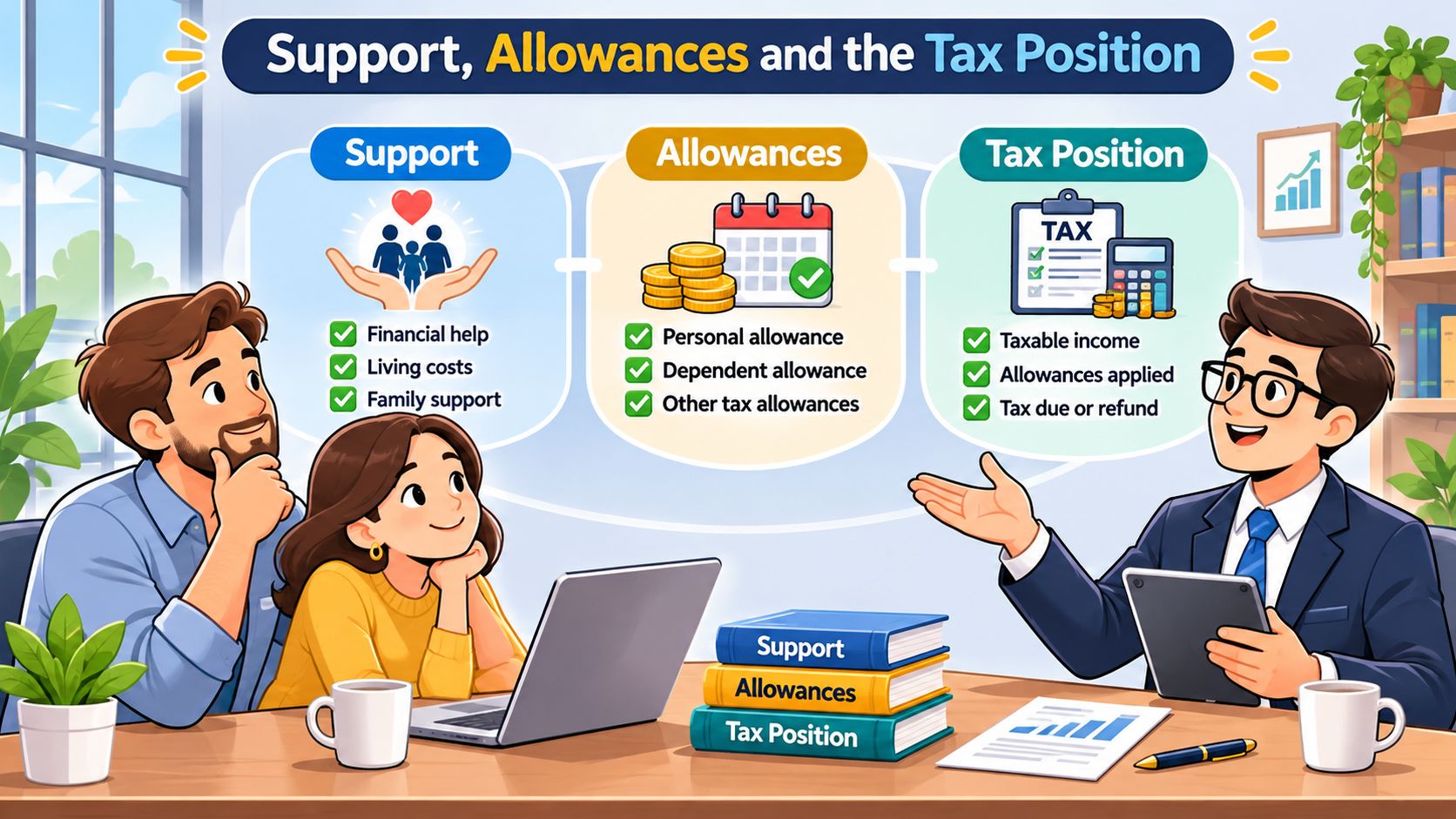
Prospective carers often ask about weekly payments early, yet ongoing support is what helps a household sustain fostering over time. Think of allowances as the fuel in the car, while support is the steering, brakes and rear-view mirror. Official government figures in Fostering in England main findings for 2024 to 2025 recorded 56,345 approved mainstream foster carers at March 2025, down 1% year on year, alongside 33,435 fostering households, a 10% fall since 2021.
Recruitment alone cannot hold a placement together when emotional, administrative and behaviour-related pressures build. Good backing is practical: a supervising social worker, preparation and ongoing learning, advice outside normal hours for approved carers, contact with other carers, and help with a child's education and health needs. Organic Fostering's support covers preparation, supervision and practical help around the household, and carers work with social workers, schools, health professionals and birth families where appropriate.
Matching a child's culture, faith, and language belongs in that same picture. A home close to school can still struggle if diet, religious observance, hair and skin care, or first-language communication are treated as afterthoughts. For older children, sibling groups and children with complex social and emotional behaviour, that planning is part of the support households should test before applying.
Minimum Weekly Allowances for Lancashire in 2026/27
In England, the government sets a national minimum weekly foster-care allowance by age band and region. Lancashire falls within the Rest of England category rather than London or the South East. The GOV.UK guidance on help with the cost of fostering sets out current 2026/27 weekly minimums:
| Child's age | Minimum weekly allowance |
|---|---|
| 0–2 | £176 |
| 3–4 | £182 |
| 5–10 | £201 |
| 11–15 | £227 |
| 16–17 | £267 |
These figures are minimum allowances intended to help cover everyday costs such as food, clothing, utilities, pocket money and activities. A council or independent agency may pay an additional carer fee or separate extras, such as birthday, festival or holiday payments, under its own published policy. The national minimum should therefore be treated as a floor, not as guaranteed total income or a fixed salary. Payments also depend on having a child in placement. A fostering allowance calculator can help separate child-related expenses from the household income you budget around.
Qualifying Care Relief and Self-Employment
Tax treatment for foster carers differs from standard PAYE employment. Under GOV.UK guidance on tax arrangements for foster carers, HM Revenue and Customs (HMRC) provides qualifying care relief. Current 2026/27 guidance sets a fixed tax exemption of up to £20,440 per tax year before tax is due on fostering income. The same GOV.UK guidance on tax arrangements for foster carers sets weekly relief for each week, or part week, a child is in care: £435 per child under age 11, and £515 per child aged 11 or over.
Foster carers normally register as self-employed and submit annual Self Assessment tax returns. The annual exemption and weekly per-child reliefs reflect HMRC rules for qualifying care relief, not a promise that every fostering payment is automatically tax-free in every personal circumstance. Other taxable earnings, changes during the year and your wider household budget all affect the final position, so check the maintained guidance and your own circumstances before relying on a number.
Choosing Between the Council and an Agency
Treating the weekly rate as the only real difference between Lancashire County Council and an independent agency is an expensive shortcut. The gap shows up later: a teenager facing exclusion, siblings who need to stay together, or a child whose behaviour is carrying fear rather than simple defiance. Councils and independent agencies both approve and supervise carers under England's national regulations. Visit frequency, who answers at night, how a match is signed off, and what is paid on top of the allowance still differ from one service to the next.
A first call works like a survey before you exchange contracts. You are checking the structure that has to hold a difficult placement, not collecting a warmer brochure.
Questions to Test Before You Apply
Ask for answers you could write down and compare. Lancashire's harder-to-place children are often older, in sibling groups, or living with complex social and emotional needs, so a vague promise of "good support" does not tell you enough.
- Supervising social worker visits: How often does the supervising social worker visit in person in the first months of a placement, and how large are typical caseloads?
- Out-of-hours cover: Who answers at night or at the weekend, is it a qualified social worker who knows your household, and what practical help can they authorise?
- Education and health coordination: Who attends school exclusion meetings, Personal Education Plan reviews, or health referrals when a child needs extra advocacy?
- Post-approval training: Which specialist courses follow initial preparation, are they delivered locally or online, and how are trauma-related behaviours addressed?
- Respite arrangements: How are planned breaks arranged and funded if you care long term for a child with high emotional needs?
- Placement-matching sign-off: How much background information do you receive before saying yes to a referral, and who has the final say if your household feels a match is not safe?
- Allegations and disruptions: What independent support is put around your household during an allegation or a placement breakdown, and how are payments handled during an investigation?
- Published pay policy: Is any carer fee paid on top of the national minimum allowance, what extras exist, and is the full structure written down in a published policy?
Use one direct test on the call. "Before taking this any further, how often does a supervising social worker visit in the first six months of a placement, and who answers the out-of-hours line if a difficult situation arises late at night?"
Services that answer plainly are easier to compare than any brochure. Reading how an agency sets out foster carer support before you apply shows whether written commitments match day-to-day practice.
Experienced Carers Considering a Transfer
Approved carers already living in Lancashire sometimes worry that moving from the council, or from another agency, will unsettle a child who is settled. In England, a transfer is meant to protect that child's stability, carry assessment records forward, and keep existing relationships intact where possible. Ask how continuity would be handled before you give notice. Do not assume the household has to start the whole process from scratch.
Organic Fostering supports foster families across Manchester and the North West. Put the same checklist to that service, or to the council: supervision, night-time cover, matching for teenagers and sibling groups, and a pay policy you can read before you apply.
Your First Conversation About Fostering
What would you need to know before deciding whether fostering fits your life? A short, informal conversation gives you space to discuss eligibility, assessment timescales, Lancashire's placement needs, and how support and allowances work.
Use the checklist above to choose three questions, and give the adviser one clear picture of your household so their answers relate to your circumstances.
Keep the discussion practical. If you are considering teenagers or sibling groups, ask how matching and support would work for those placements. If you are unsure about caring for a child with complex social and emotional needs, explain that uncertainty. The conversation can help you understand what preparation and ongoing guidance would involve, without promising a placement or approval.
You can take time afterwards. An enquiry alone does not start an assessment, and pausing until a house move is complete or shift patterns settle is a sensible outcome.
You can contact your local council's fostering team or an independent agency serving the region. To discuss the Manchester and North West service based at Beaumont House, Office 4, 455 Chester Road, Manchester M16 9HA, call 0161 241 1332 or email info@organicfostering.co.uk. Confirm whether your Lancashire address falls within its current recruitment area before discussing an application.
Start an informal conversation with Organic Fostering, an Ofsted-registered independent fostering agency, and ask what the next step would involve for your household.